Red Swaying Beyond the Vidro. A Story of Transparent "Windows" from Edo to Meiji.
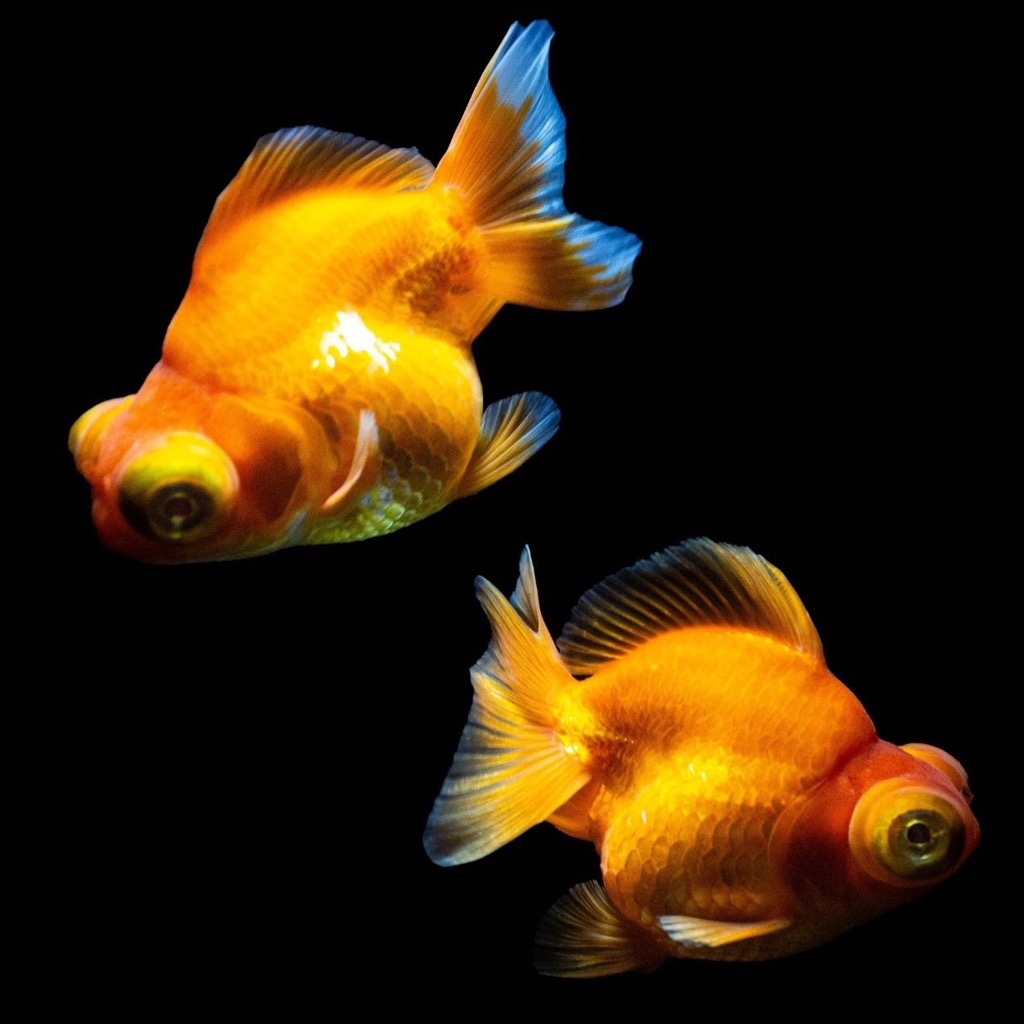
The pleasure of viewing goldfish from the side.It is often thought to have began in the Meiji era with civilization and enlightenment, but its roots actually date back to the Edo period.Hello, this is Junae *.
Today, let's unravel the transparent existence called "glass" that has supported the goldfish culture of Japan, and the history of our "gaze" that changed from Edo to Meiji.
Edo's Luxury, Vidro Goldfish Bowl
From the middle to the late Edo period, the glasswork technology introduced through Nagasaki brought a new beauty called "Vidro" to the city of Edo.Looking at Ukiyo - e prints from that time, people are depicted cooling off while viewing goldfish put in round glass bowls(goldfish balls) or taking goldfish home.
These are hand - blown glass made by craftsmen breathing into them.Unlike the flat glass of today, there was a soft "fluctuation" on the surface, and the goldfish inside must have looked a little distorted.Still, the experience of seeing the figure of a goldfish through the side must have been a luxurious and modern play that made people of that time sigh.
"Plate Glass" that Expanded the Field of View in the Meiji Era
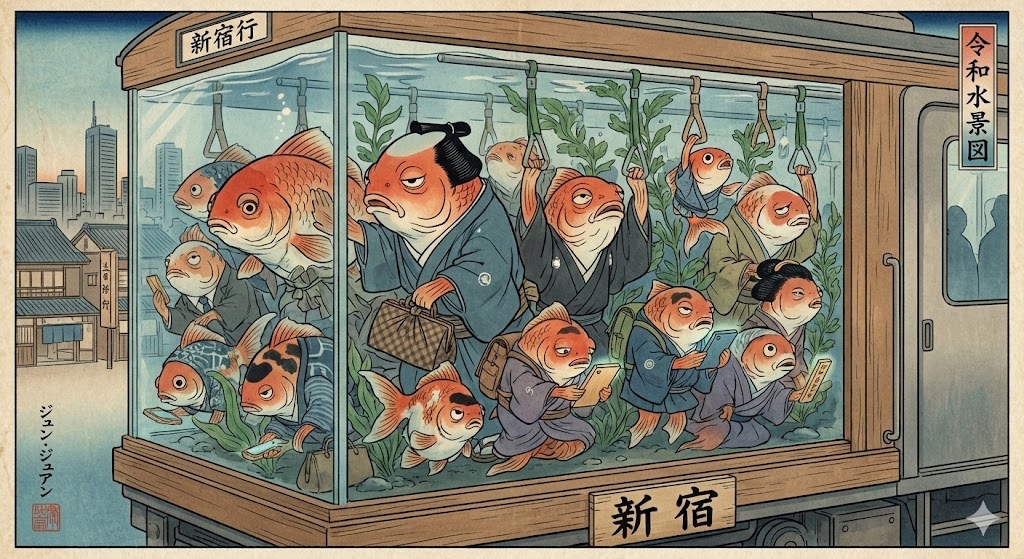
Entering the Meiji era, the technology of "plate glass" was introduced in full scale from the West along with civilization and enlightenment.The major change that occurred here is that the glass changed its form from a "round bowl" to a "square aquarium".
The unique distortion in the hand - blown bowl disappeared, and we became able to observe the figure of the goldfish as it is, more clearly from the side.The spread of this "straight gaze" became the foundation of the joy of meeting eyes with goldfish in front of the aquarium and the culture of cutting out its delicate texture in photos for us today.
"Curiosity" Resonating Across Eras
The fantastic distorted red that Edo people saw in the fluctuation of Vidro, and the realistic life that Meiji people saw beyond the flat glass.Even if the way of seeing changes due to the evolution of tools, our pure "curiosity" of wanting to quietly peek into the life of goldfish across a single transparent wall has not changed.
The transparent window called the aquarium is not just something to confine goldfish, but it might be an important "bridge" for us to encounter life living in a different world and touch its beauty.
Gaze Inherited by the Lens
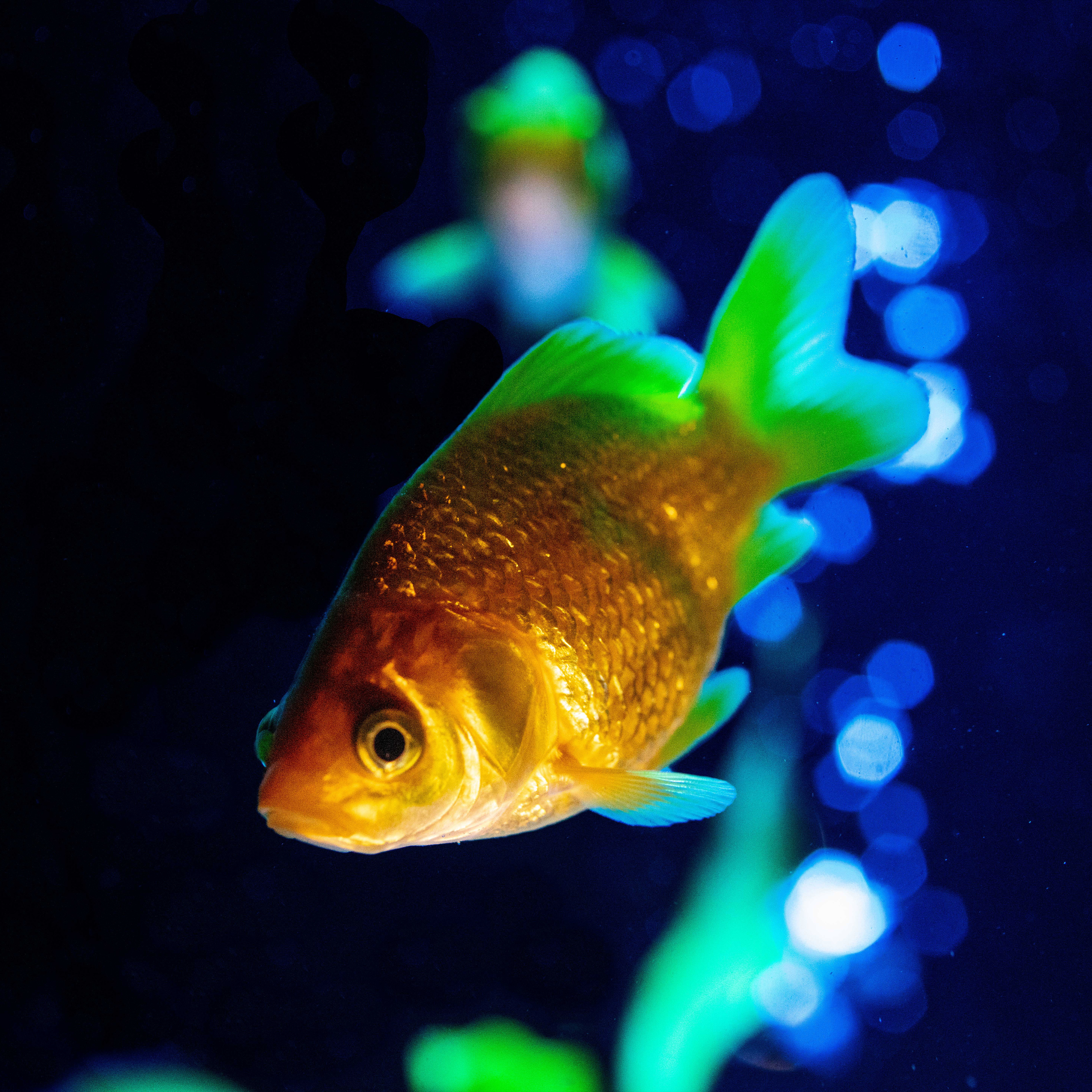
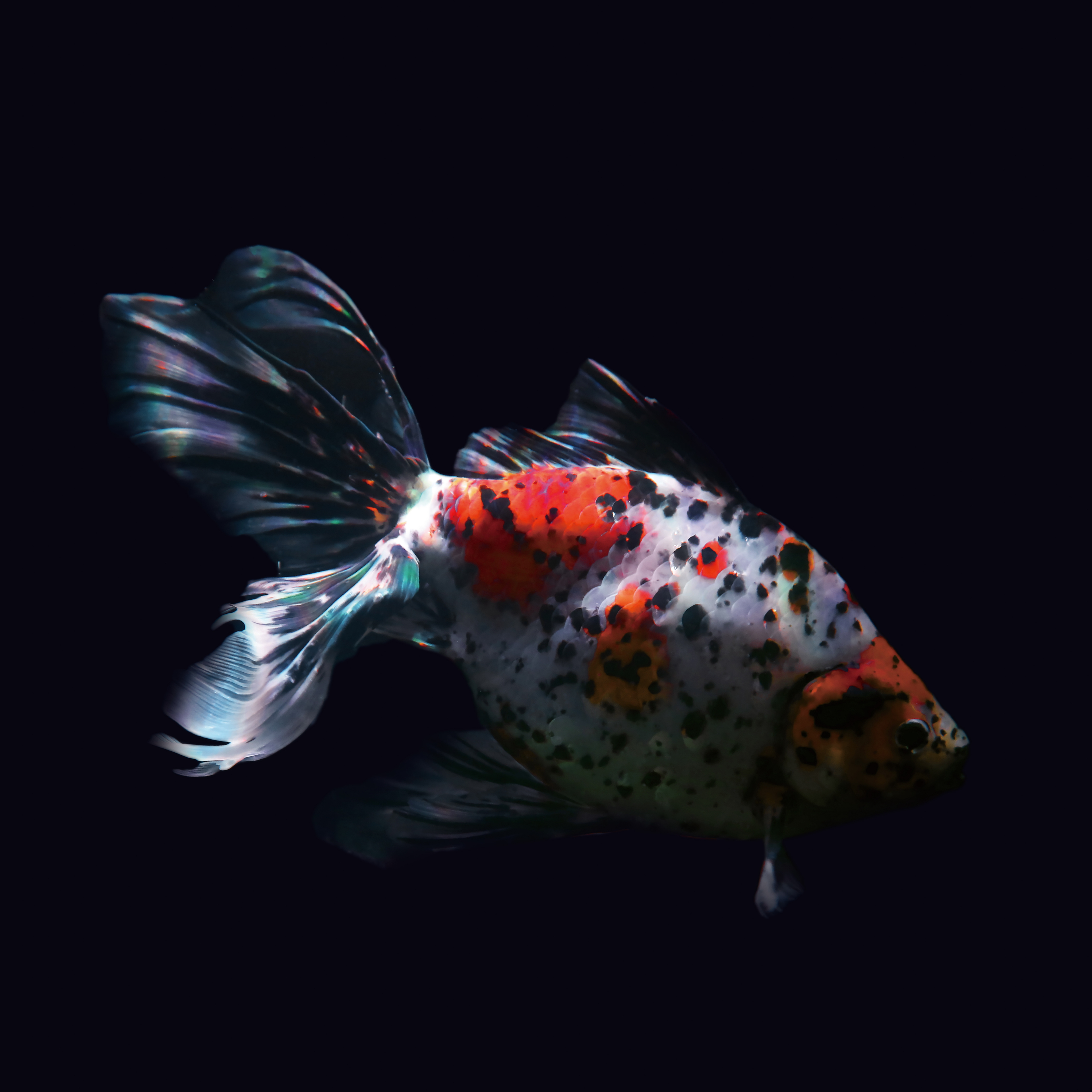
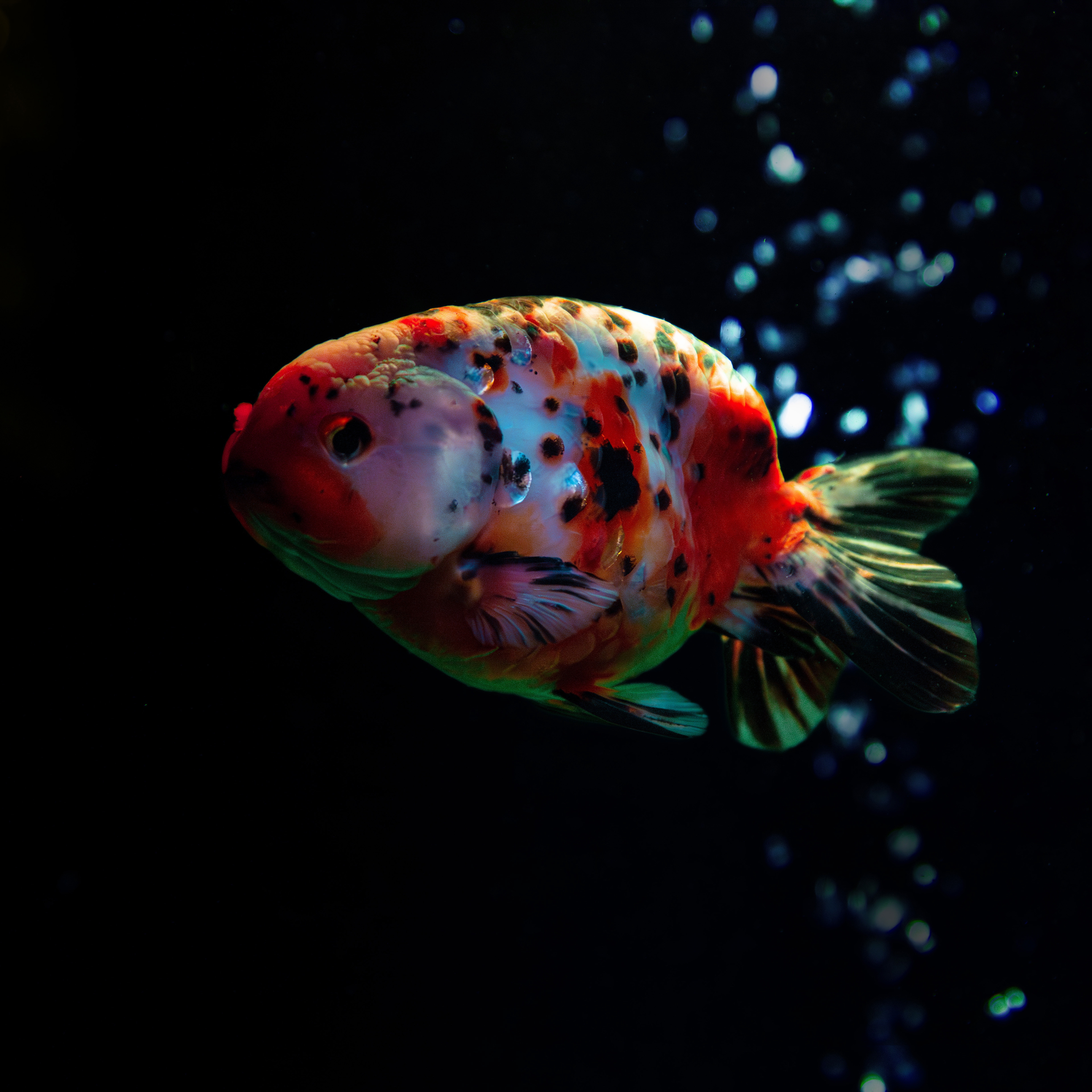
That we are staring at goldfish through the camera lens now.It is on the same continuum of the emotion that Edo people loved Vidro and Meiji people were surprised by the flat aquarium for the first time.Because there is a transparent boundary called glass, we can feel the preciousness of the life called goldfish more deeply and quietly.While thinking about the history of the act of "staring", I would like to continue recording the brilliance of each moment with care.
Glass Bowls of the Edo Period(Vidro): In the works of Ukiyo - e artists Kunisada Utagawa(Toyokuni III) and Hiroshige Utagawa, multiple beauty prints depicting glass goldfish bowls with transparent or indigo borders exist, confirming that they were popularized as high - class ornamental tools.
Transition from "Top View" to "Side View": In the Edo period, "pottery and wooden bowls" viewed from above were still the mainstream, but the appearance of glass bowls became the pioneer of a new aesthetic of "admiring from the side".
Spread of Plate Glass: With the full - scale import and domestic production(Asahi Glass, etc.) of plate glass in the Meiji era, "square aquariums" providing a distortion - free field of view spread, and the three - dimensional beauty of the goldfish's body shape became more emphasized.