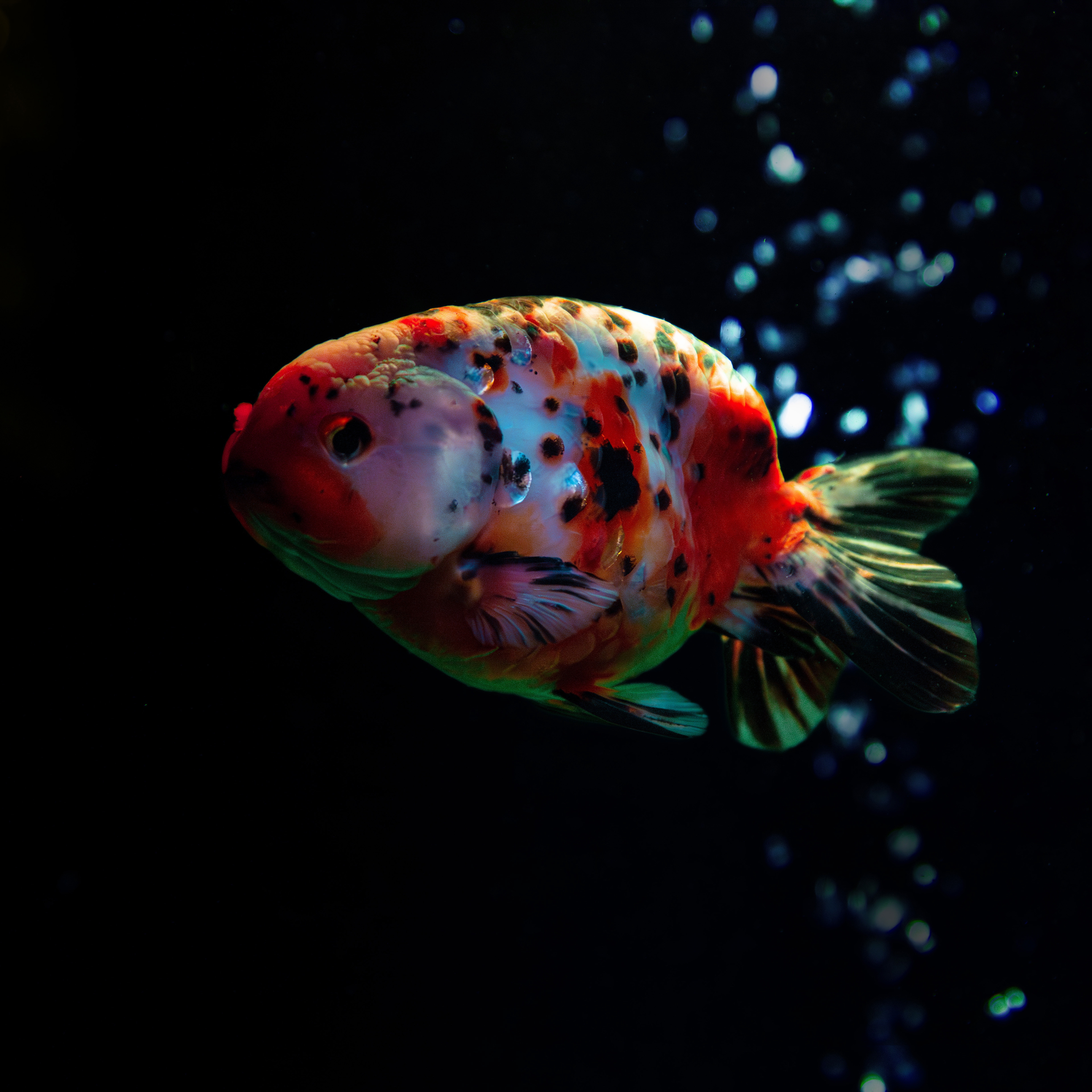
Ranchu — History Carried on its Back, and the Dignity of a King.
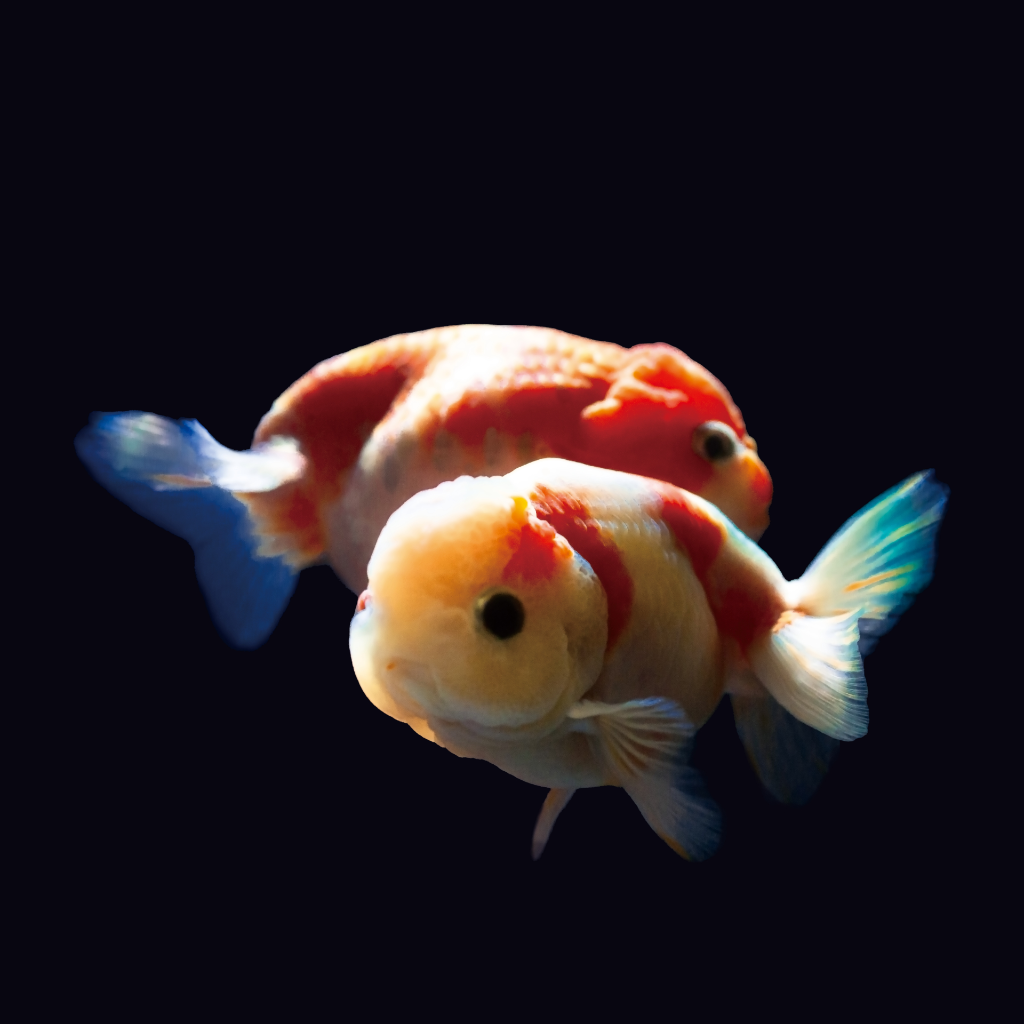
Among many goldfish, "Ranchu" stands out with a distinct presence.In its figure worthy of the name "King of Goldfish", the unique aesthetic sense that Japanese people have refined over a long time is condensed.Hello, I'm Juane*.
Today, I would like to talk about the profound beauty of Ranchu, obtained by daring to "discard the dorsal fin".
Smooth Ridgeline Created by "Subtraction"
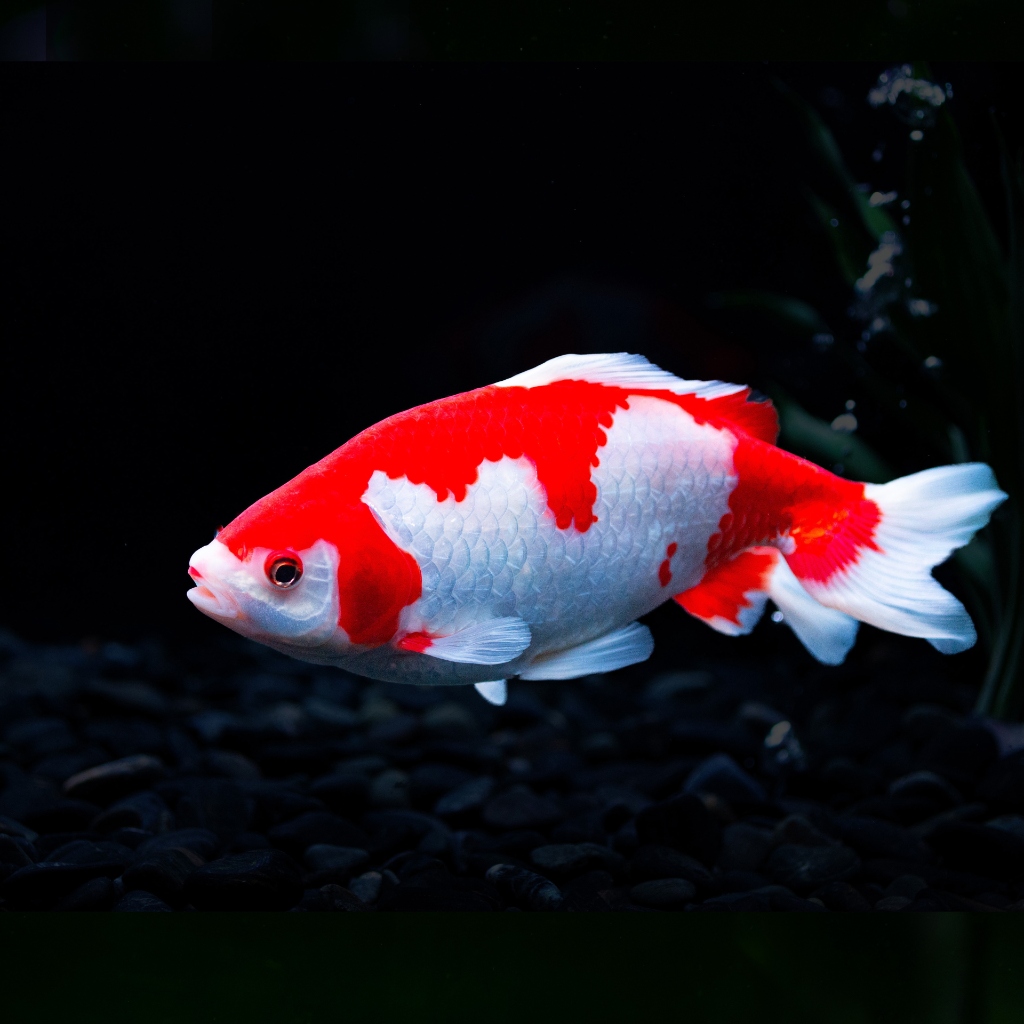
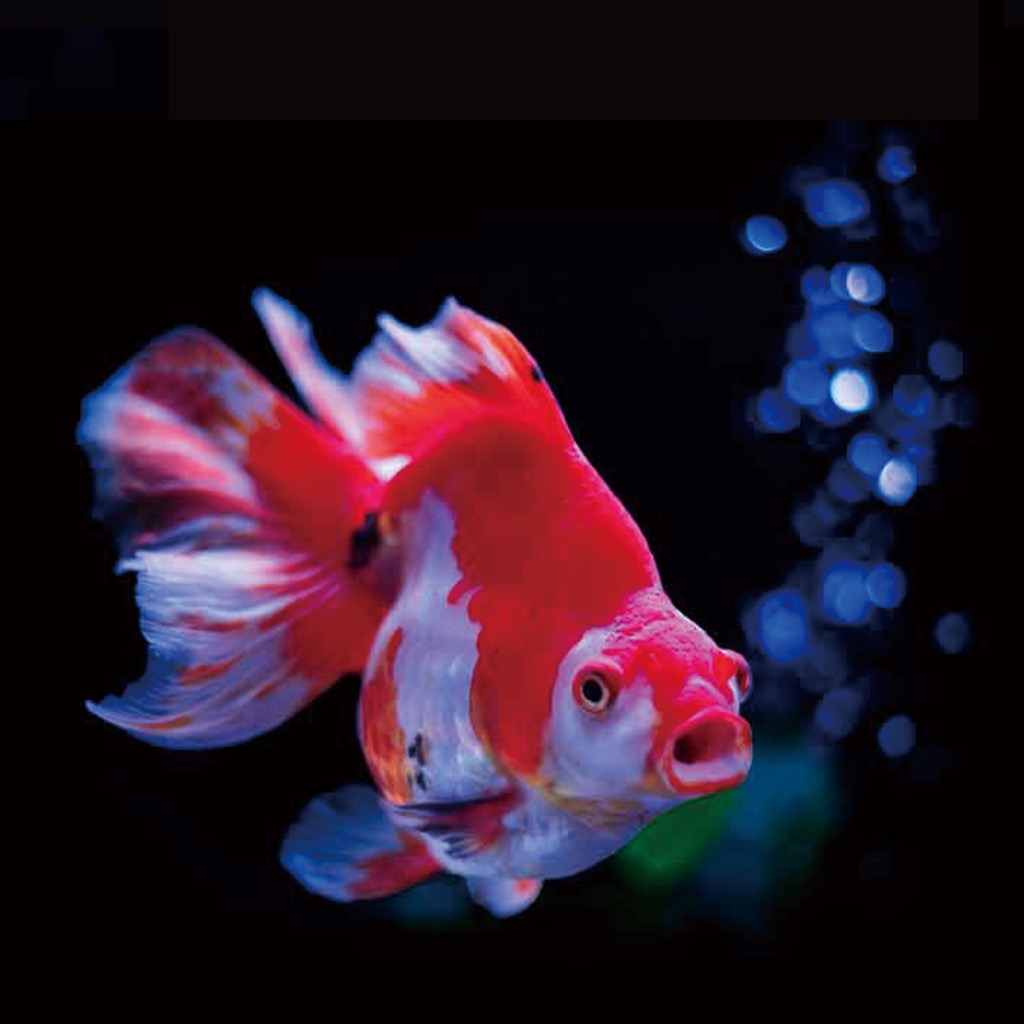
What surprises people who see Ranchu for the first time may be that there is no "dorsal fin" on its back.In the Edo period, when goldfish were still "things to view from above (top view)", people found beauty not only in the beauty spreading sideways but also in the "texture" of how smooth and powerful the back line is.Shaving off unnecessary decorations and competing with just pure curves and volume.That "aesthetics of subtraction" makes us feel a quiet and powerful spirituality that leads to traditional Japanese architecture and gardens.
Dignity with Will Dwelling in the Back of the Eyes
Another major feature is the "Wen (growth on head)" that develops on the head.Its texture, which rises like a lion's mane, deepens with age and creates a one-of-a-kind expression. This Wen is not just a decoration. It is proof that they have lived strongly in that place and matured. Combined with a massive physique, Ranchu has "dignity" that other goldfish do not have, and "grace" that makes you straighten your back instinctively.
Respecting "As it is" of Life
Among Ranchu enthusiasts, the quality of the shape in millimeter units is sometimes discussed.However, what we Jun * Juane want to cherish is the "sense of reality" released by each one beyond the beauty that cleared that strict standard.It is not precious because it can do something or because it is an ideal shape, but its existence itself already has completed value.Staring at the massive appearance of Ranchu, I feel like I am being taught the preciousness of living with an unshakable self.
Quiet Passion Reflected on the Water Surface
When we look at Ranchu from above, we see the history itself where generations of people have faced life and repeated dialogue there.Eternal stylistic beauty dwells in a momentary flicker.We, Jun * Juane, would like to continue to sincerely copy the quiet and deep beat of life deep inside that king's dignity.
Origin of Ranchu : In the Edo period, a breed without a dorsal fin called "Ranchu (Egg Worm)" introduced from China was uniquely improved in Japan and became the current shape.In the Meiji era, evaluation criteria as "ornamental fish" were established in Tokyo, and many enthusiast organizations(leagues) exist to this day.
Aesthetics of Top View(Uwami) : For Japanese Ranchu, "back width (width of the back)" and "tension of the tail" when viewed from above are most emphasized.This is an interesting example where the historical background of being kept in ceramic pots and wooden tubs determined the physical evolution of the breed.
Development of Wen : The fat layer on the head has developed, and its shape changes greatly depending on water quality, food, and pedigree.It is also a mirror that reflects the health condition, and the more mature the individual, the more its dignity increases.