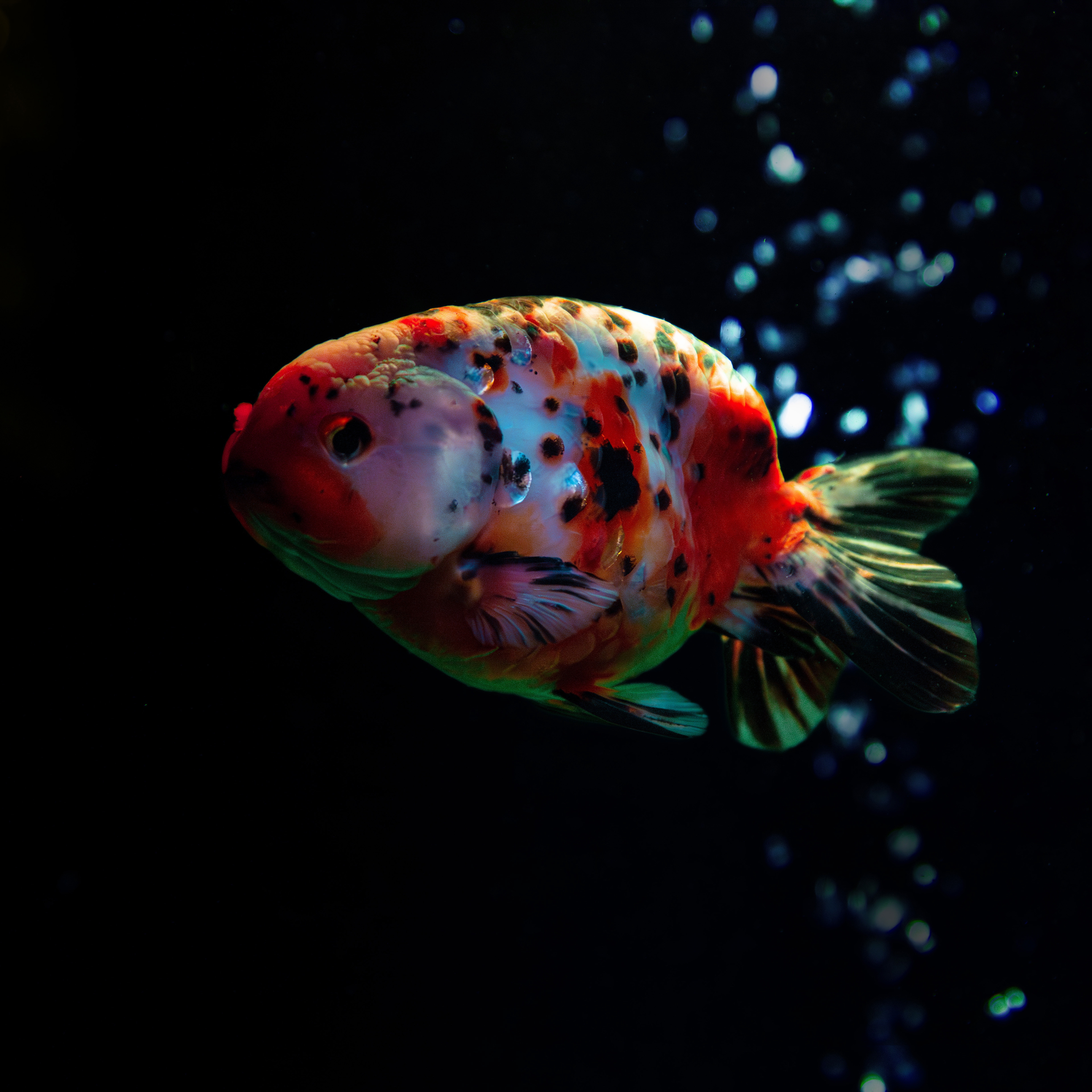
Ryukin — Drifting Crimson, the "Chic" of Elegant Curves.
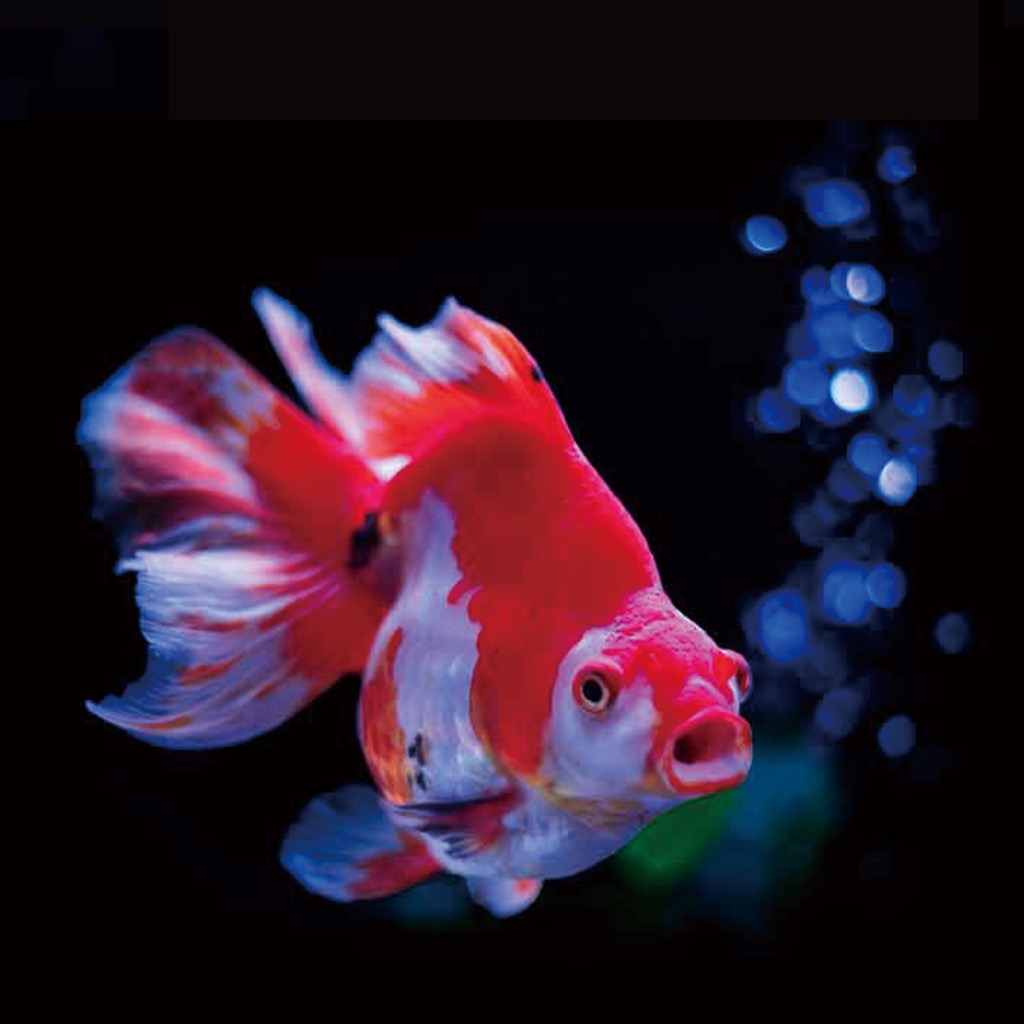
When people hear "goldfish," the first thing that comes to many minds is that adorable rounded figure.The "Ryukin," swimming while trailing a long fluttering tail, is the "eternal standard" that has shaped Japanese goldfish culture.Hello, I'm Juane*.
Today, let's unravel the memory of the journey engraved in its name and the "aesthetics of curves" embodied by the Ryukin.
Gift from the Distant "Ryukyu"
The origin of the name Ryukin lies in "Ryukyu (present-day Okinawa)" as the name suggests.In the Edo period, it was named so because it was transmitted from China via Ryukyu to Satsuma(Kagoshima).To the people of that time, this red fish that came across the southern seas must have appeared exotic and mysterious.
The high - arched back and round body, distinguishing it from the straightuna - type goldfish until then.That might have been the completed form of "goldfish as a modeling" that Japanese people encountered for the first time.
"Top View" Created the Water Surface Dress
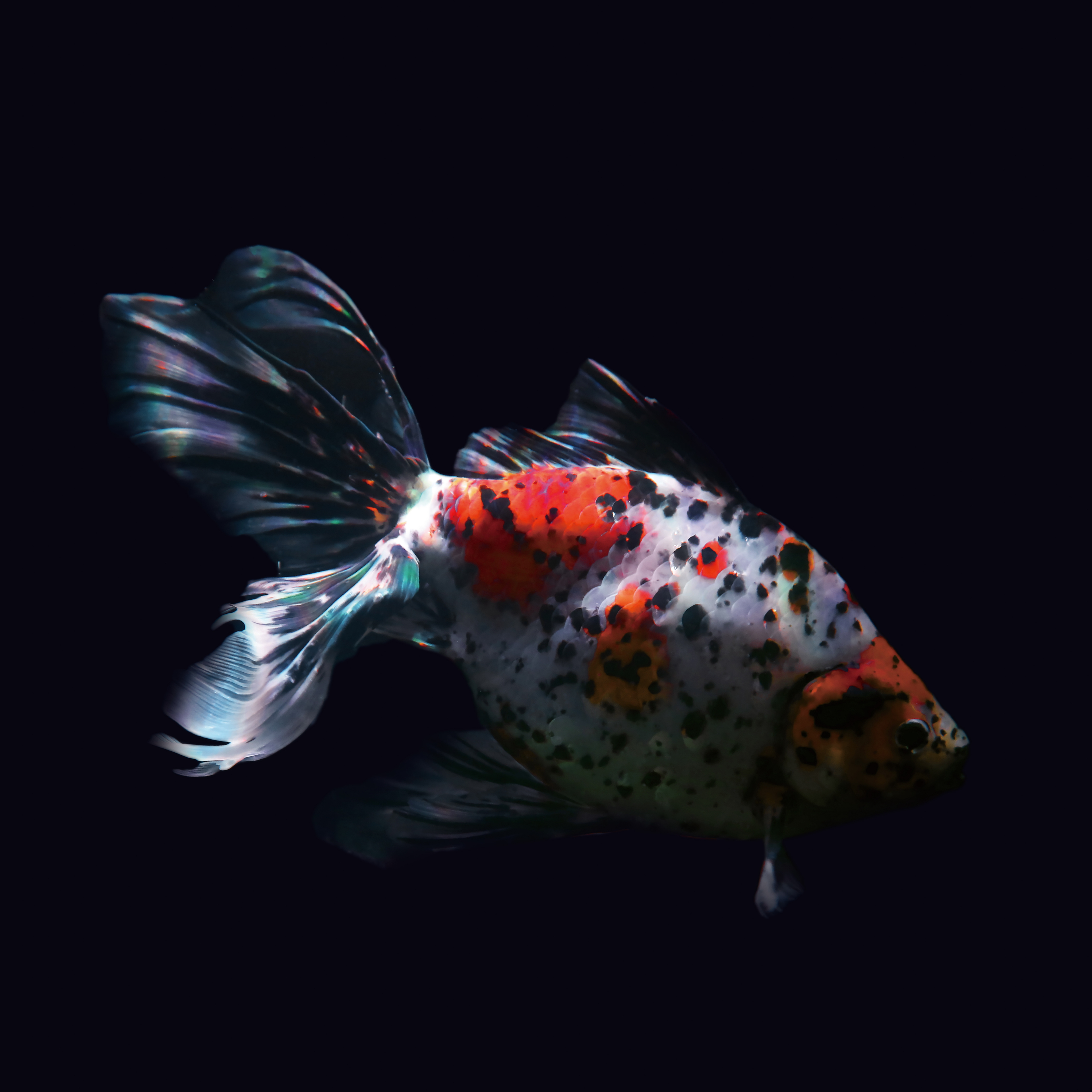
What is indispensable in talking about the beauty of Ryukin is the tail fin that spreads like a fan.In an era when there were no glass aquariums, people enjoyed viewing goldfish placed in ceramic pots or wooden tubs from above.The overlapping of tail fins that flip softly on the water surface and spread transparently in the light.
That elegant wavering is like a large peony blooming in the water. "How to create a rich lingering tone in a limited space." Such "chic" sensibility of Edo polished the fins of Ryukin longer and more supple.
Dialogue of Vermilion and White Spun by Healthiness
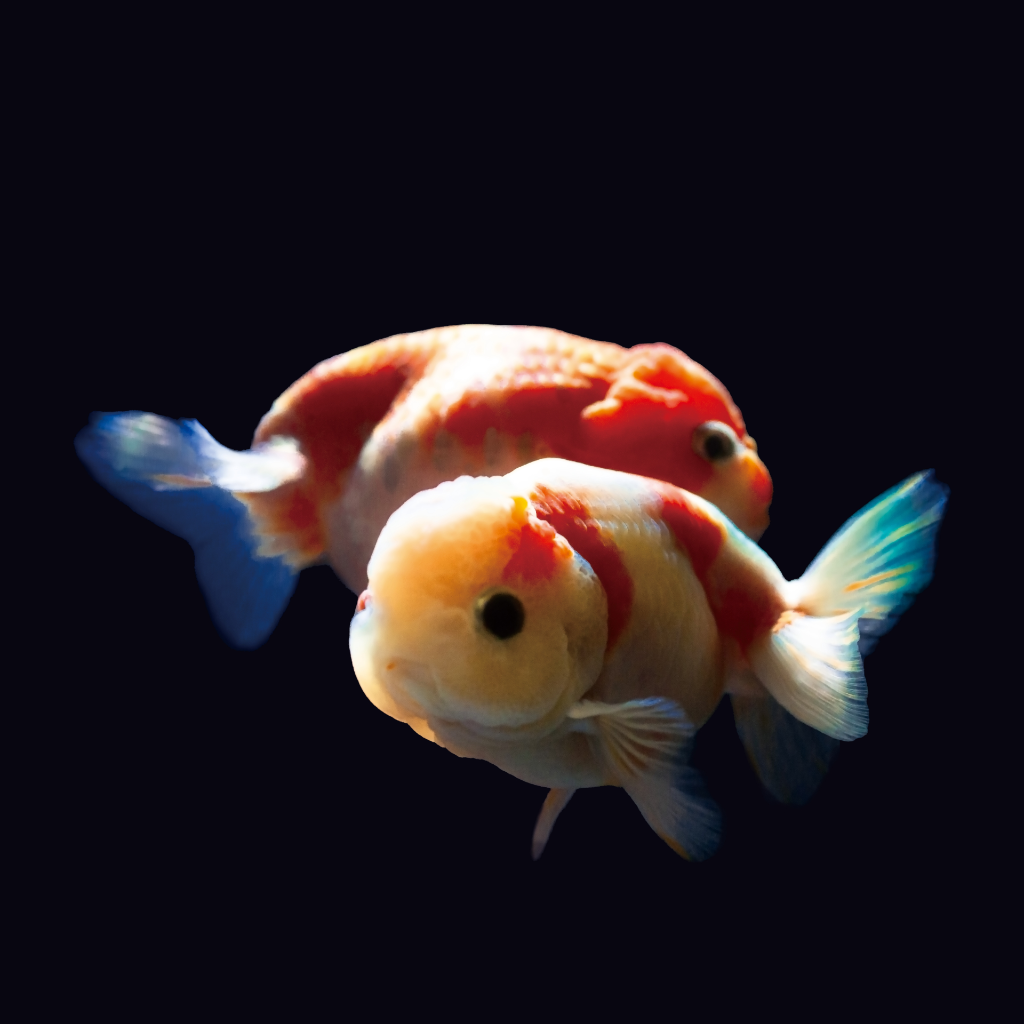
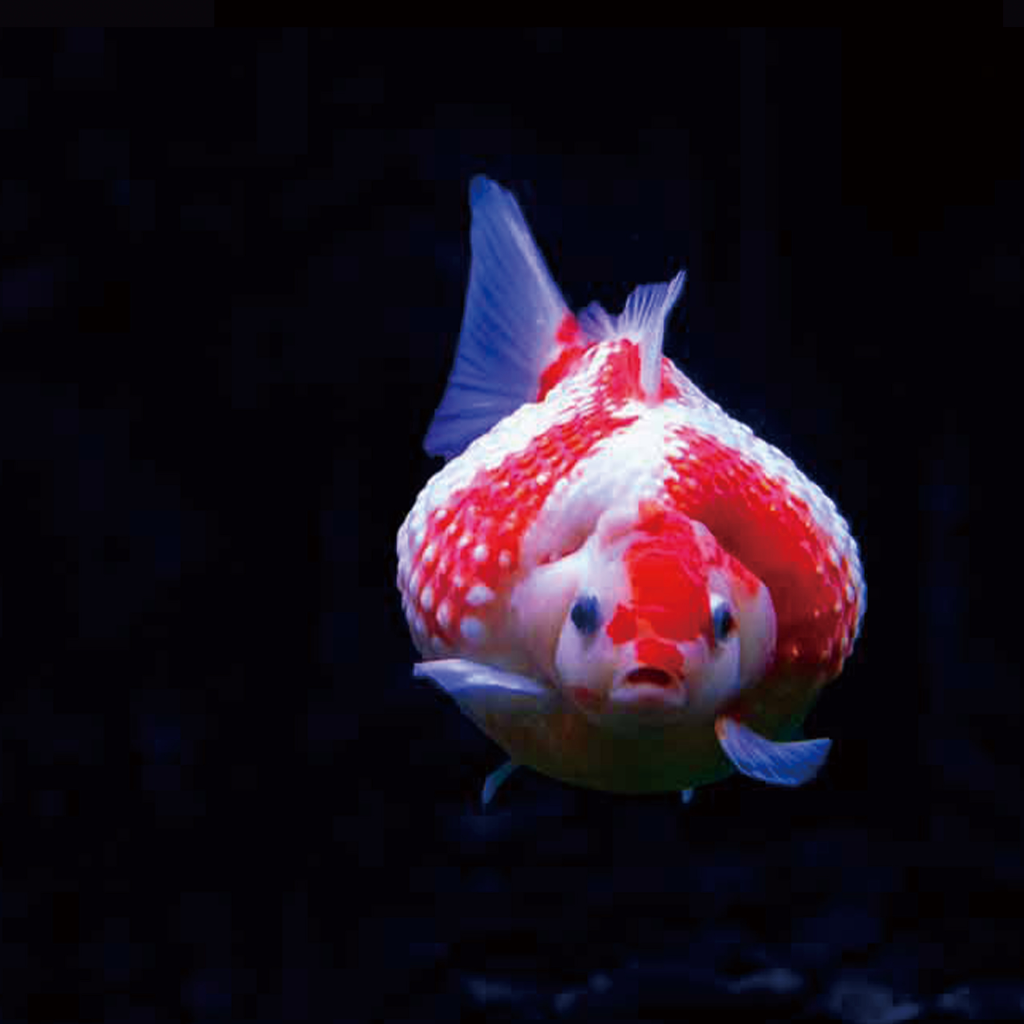
Among Ryukins, the "Sarasa" pattern where red and white mix is particularly popular.However, that vivid color and the curve of the taut back are never decorated from the outside.As I mentioned before, it is Proof that the goldfish is breathing healthy and freely in that place.
The vitality overflowing from the inside creates that unique sense of volume and powerful swimming.The reason why we are attracted to Ryukin is not only the beauty of the shape, but perhaps because we instinctively sense the "sense of fulfillment of life" dwelling in that curve.
Beauty Swimming Beyond Time
Staring at the figure of Ryukin, I realize that people hundreds of years ago were entrusting their hearts to this elegant wavering in the same way.Even if the times change, there is unchanging beauty there.When we, Jun * Juane, cut out a section of Ryukin's curve through the lens, we feel the weight of history flowing there and the freshness of life at the same time. A waltz in the water drawn by one Ryukin. We would like to continue to cherish and convey that beautiful tradition.
Origin of Name and History : It is said that it came from China to Nagasaki and Satsuma via Ryukyu in the 1770s(An'ei era). It replaced the "Wakin" until then and became the main character of the goldfish boom after the mid-Edo period.
Characteristics of Variety : It is a fixed round individual that appeared by mutation, and there is an aesthetic standard that the higher the body height(height of the back), the better.This is also an evolution adapted to the appreciation environment where having volume vertically rather than spreading horizontally looks more beautiful when viewed from above when keeping in a water pot with a limited area.
Etymology of Sarasa : It is called so because it has red and white spots similar to the textile "Sarasa (Chintz)" transmitted from India.In Japanese aesthetics, red and white is an auspicious color scheme symbolizing "Hare (celebratory occasion)", which is one of the reasons why Ryukin is widely loved.