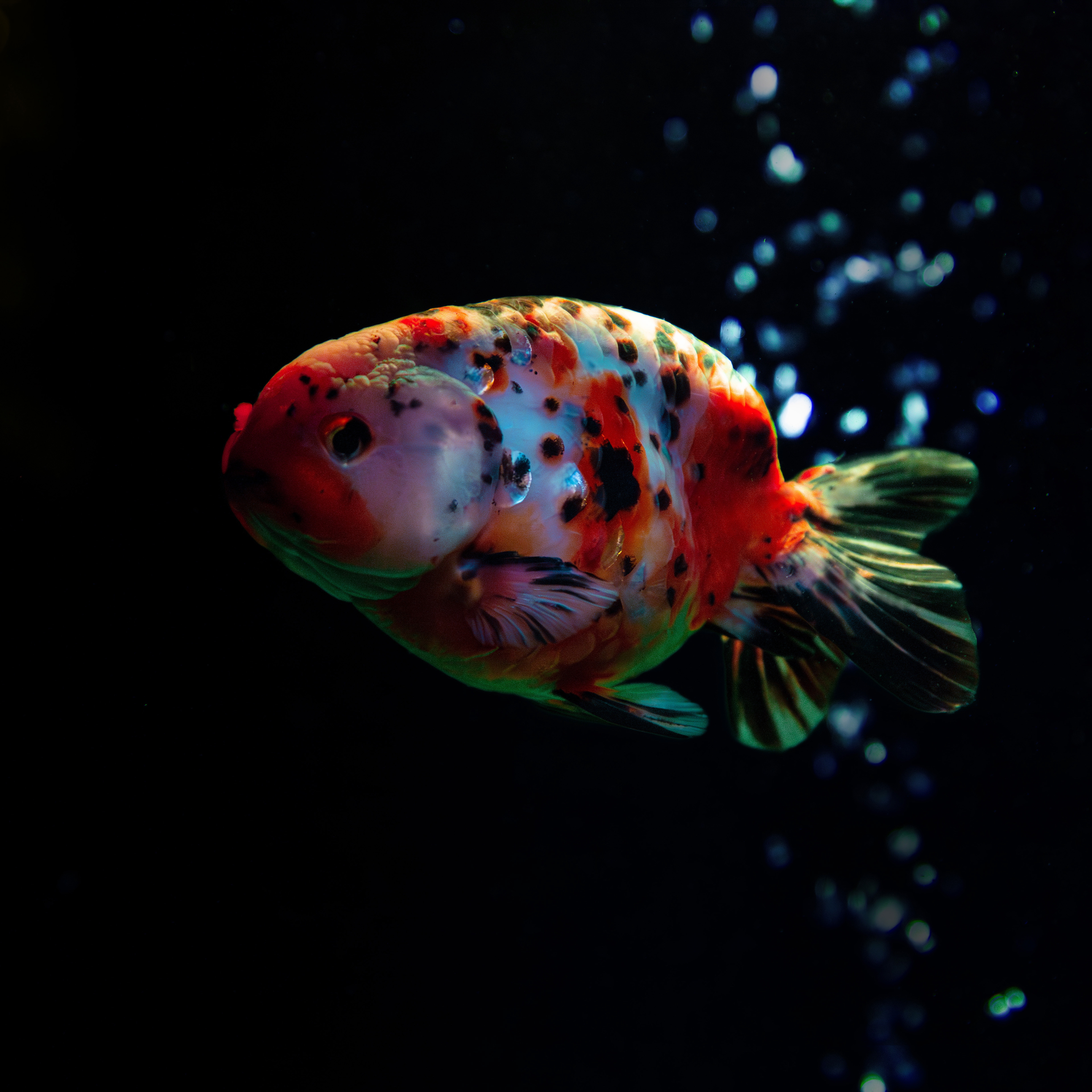
Edo Nishiki — Clad in Traditional Form and "Chic" Colors.
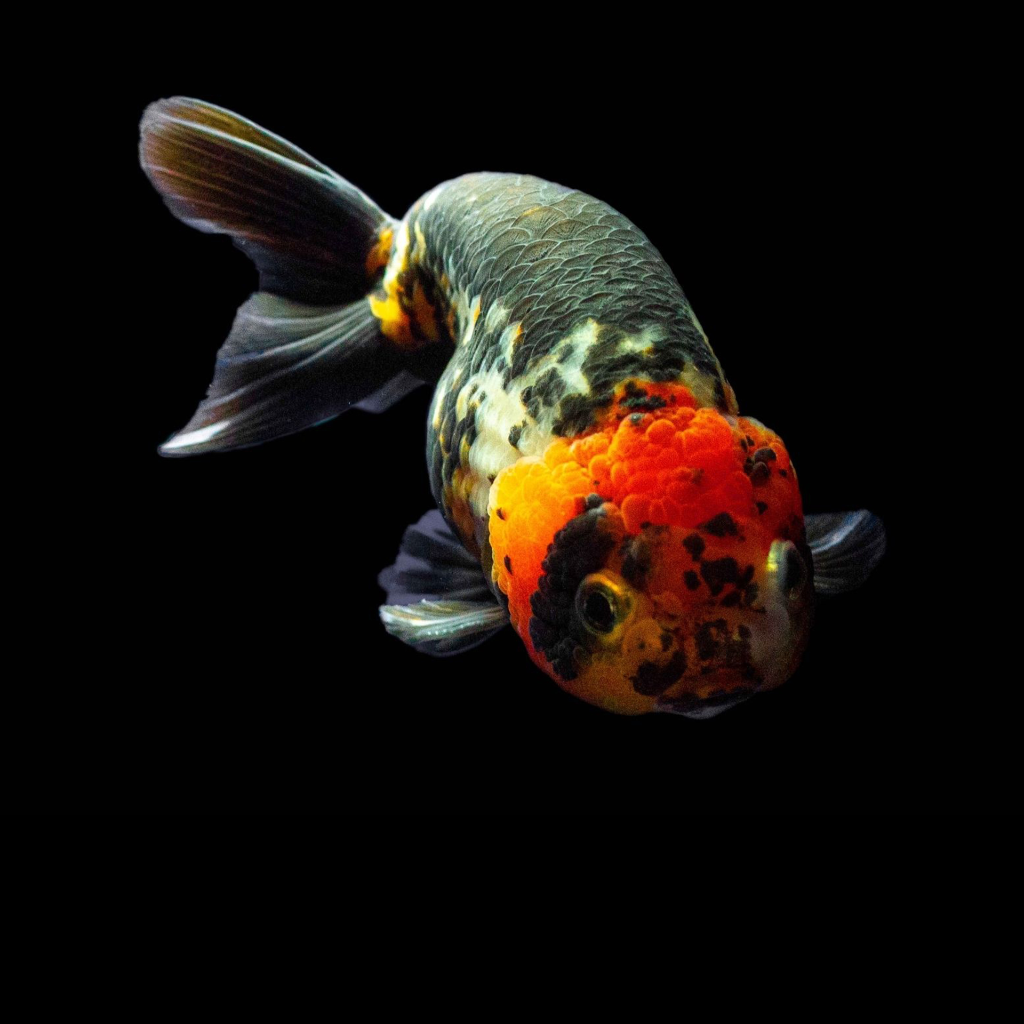
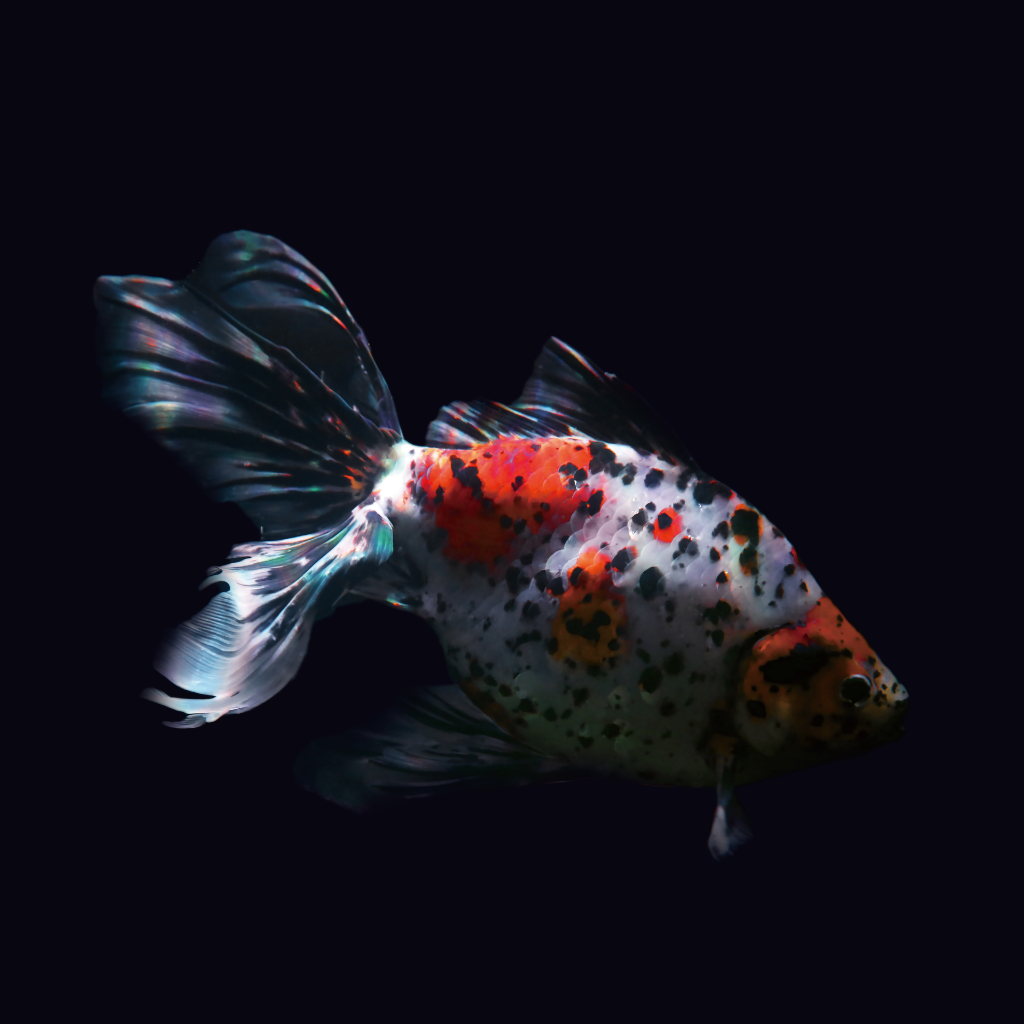
A goldfish that looks like it's wearing a fluffy, colorful kimono on the completed form of a Ranchu. That is Edo Nishiki. The name gives a sense of the old-fashioned atmosphere of the Edo period, but this breed is actually a "new era art" born from passionate crossbreeding in the Showa period. Hello, I'm Juane *.
Today, I would like to talk about the profound charm of Edo Nishiki, where shape and color show perfect harmony.
Shape of "Subtraction" and Color of "Addition"
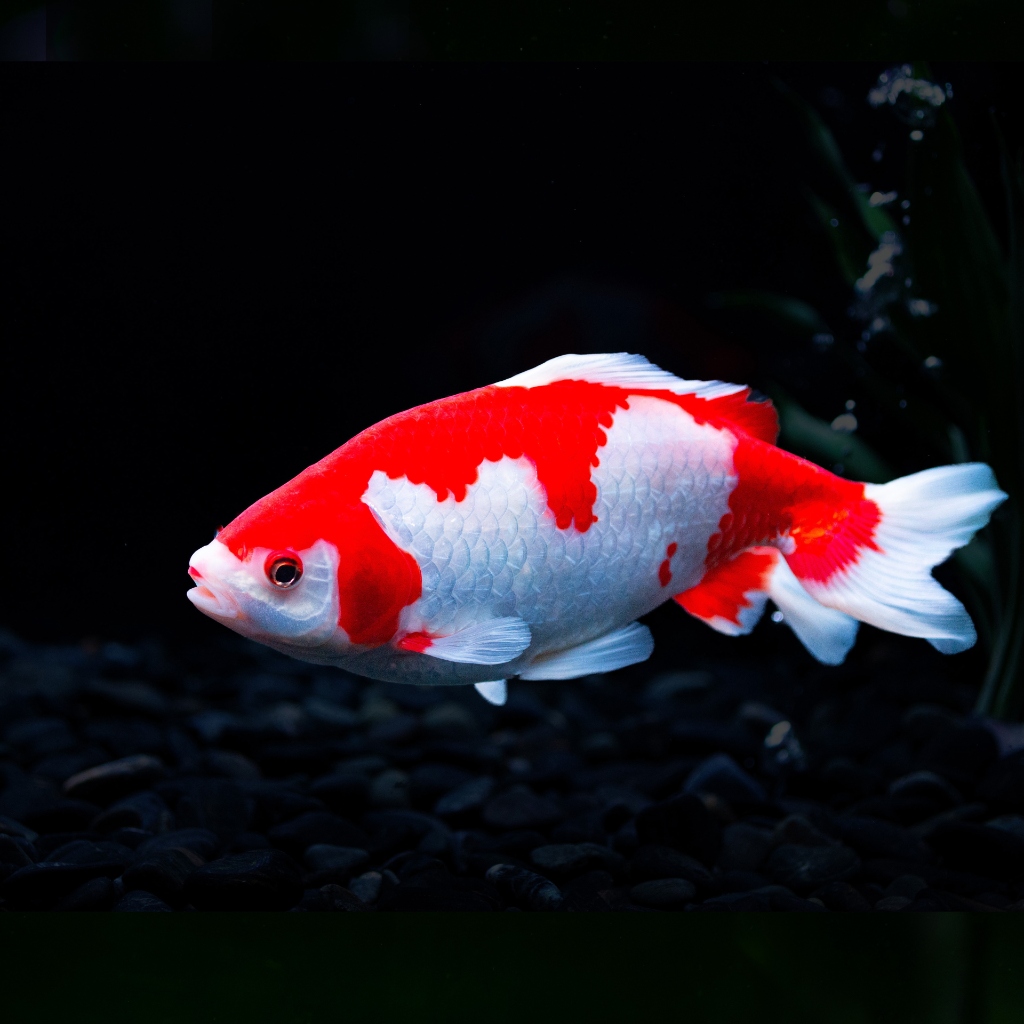
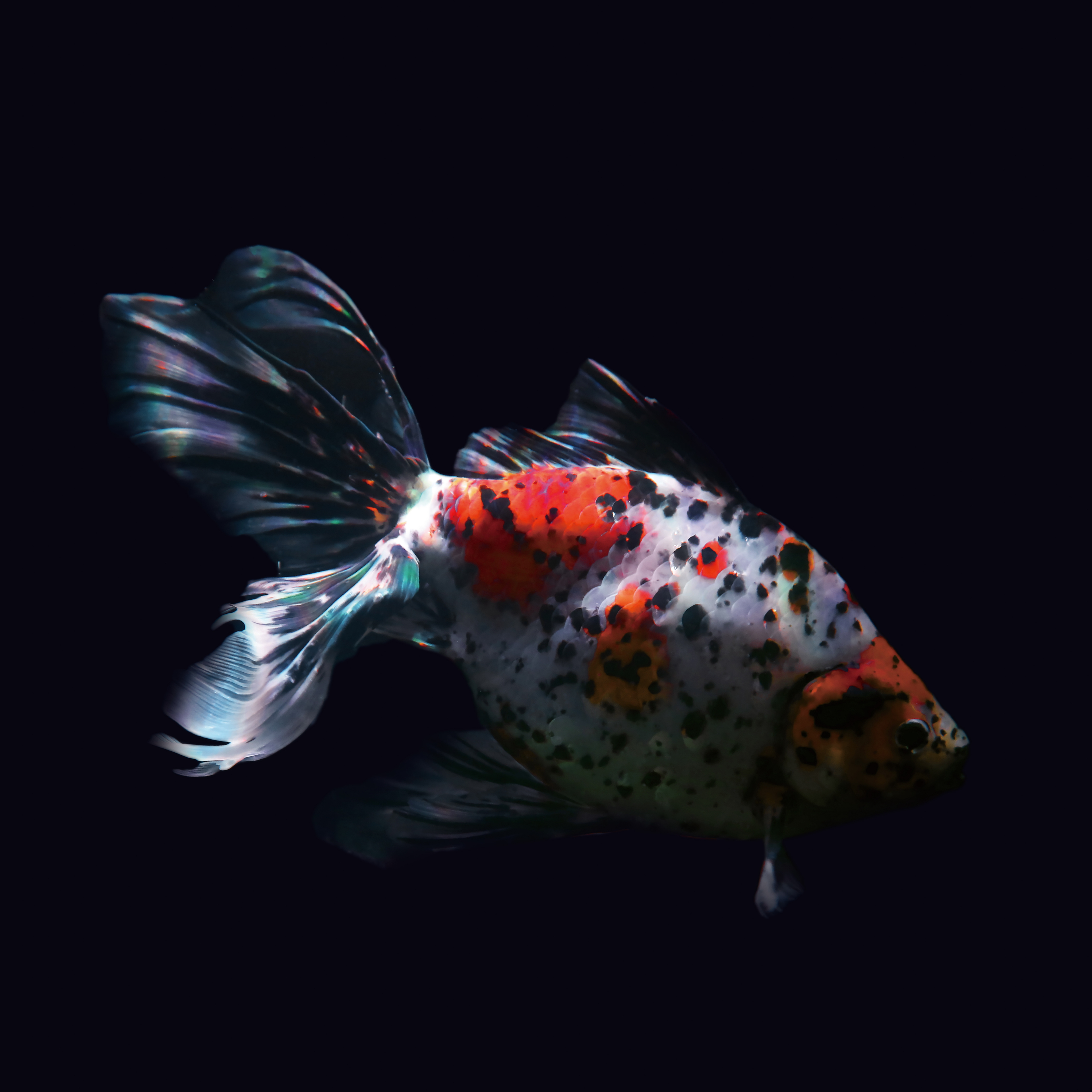
The major features of Edo Nishiki are the "smooth back without a dorsal fin" inherited from Ranchu and the "Calico (three colors)" colors where red, white, and indigo mixed intricately.Adding lively colors dare to the stoic modeling of "Ranchu" which shaved off unnecessary things.The awesomeness of Edo Nishiki is that elements that seem contradictory at first glance blend beautifully on one body.It is as if it embodies the "chic (Iki)" of Edokko(people of Edo), who hide style in simplicity.
Deep "Blue" Created by Transparent Scales
When you stare at Edo Nishiki, you will notice that the parts where the scales shine brightly and the moist transparent parts are mixed.This is a feature called "mosaic transparent scales".The inner color seen through these transparent scales creates "indigo" and "pale blue-green (Asagi-iro)" which are rare in the goldfish world.It is not just a superficial color, but a layer of color that seems to ooze from the inside.That depth gives Edo Nishiki a profound dignity like a "Nishiki-e (woodblock print)".
"Harmony" where Different Personalities Resonate
Edo Nishiki was born from the meeting of two varieties with completely different personalities, Ranchu and Azuma Nishiki.Those with different roots mix together to create one new beauty.That process resembles the journey of life where we meet diverse others and find a new self.
Cherishing the ideal way of a "community" that harmonizes as a whole while recognizing individual differences... I feel that the figure of Edo Nishiki's complex colors maintaining a superb balance in one animal quietly teaches us the "beauty of diversity".
Moving Nishiki - e Floating in Water
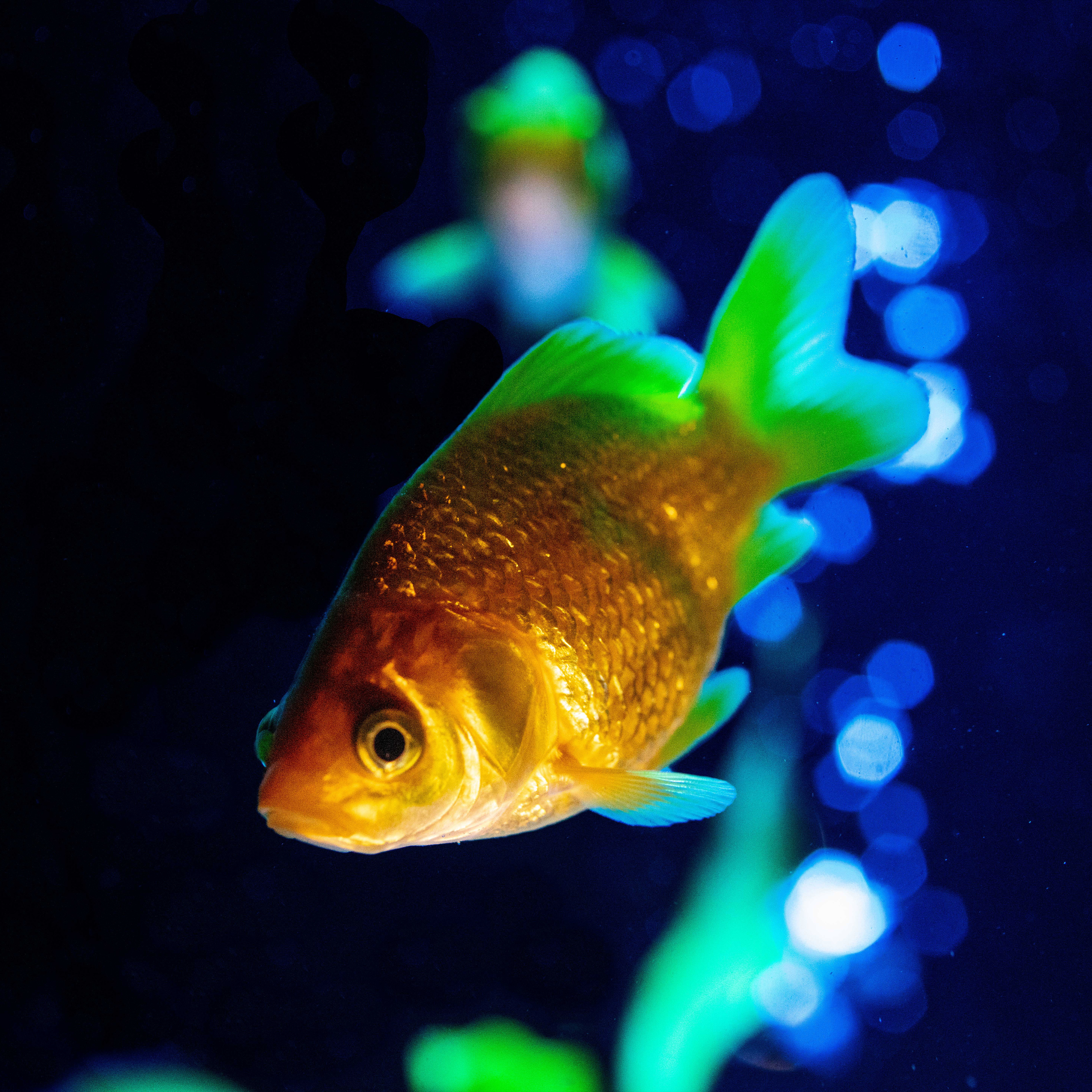
The figure of Edo Nishiki crossing the aquarium leisurely is exactly a "Nishiki-e" drifting in the water.Not too flashy, but not too plain.In that exquisite balance, the spirit of "Wabi-Sabi" and "Iki" that Japanese people have cherished dwells.
We, Jun * Juane, also want to cherish and copy the overlapping of these complex and delicate colors down to every single grain of light.Respecting tradition while always exploring newness.We would like to continue learning from such a dignified attitude of Edo Nishiki.
Establishment of Variety : Born in 1951(Showa 26) by crossbreeding Ranchu and Azuma Nishiki(Oranda Shishigashira x Calico telescope eye) by the second generation goldfish researcher Kichigoro Akiyama.It is one of the masterpiece varieties representing post - war Japan that took many years to complete.
Science of Mosaic Transparent Scales : It is a genetic feature where normal scales(with a reflective layer that shines silvery) and transparent scales without a reflective layer coexist in a mosaic pattern.In the transparent scale part, the color of the internal organs and blood can be seen through, making unique "blue (indigo)" and "pink" coloration possible.
Variation of Colors : The beauty of Edo Nishiki is said to be determined by the distribution of "red, black, blue, white", but the fact that no two patterns are the same is also a great attraction.This is due to polygenic inheritance, and has an aspect as "living art" that continues to change minutely depending on the environment and growth process.