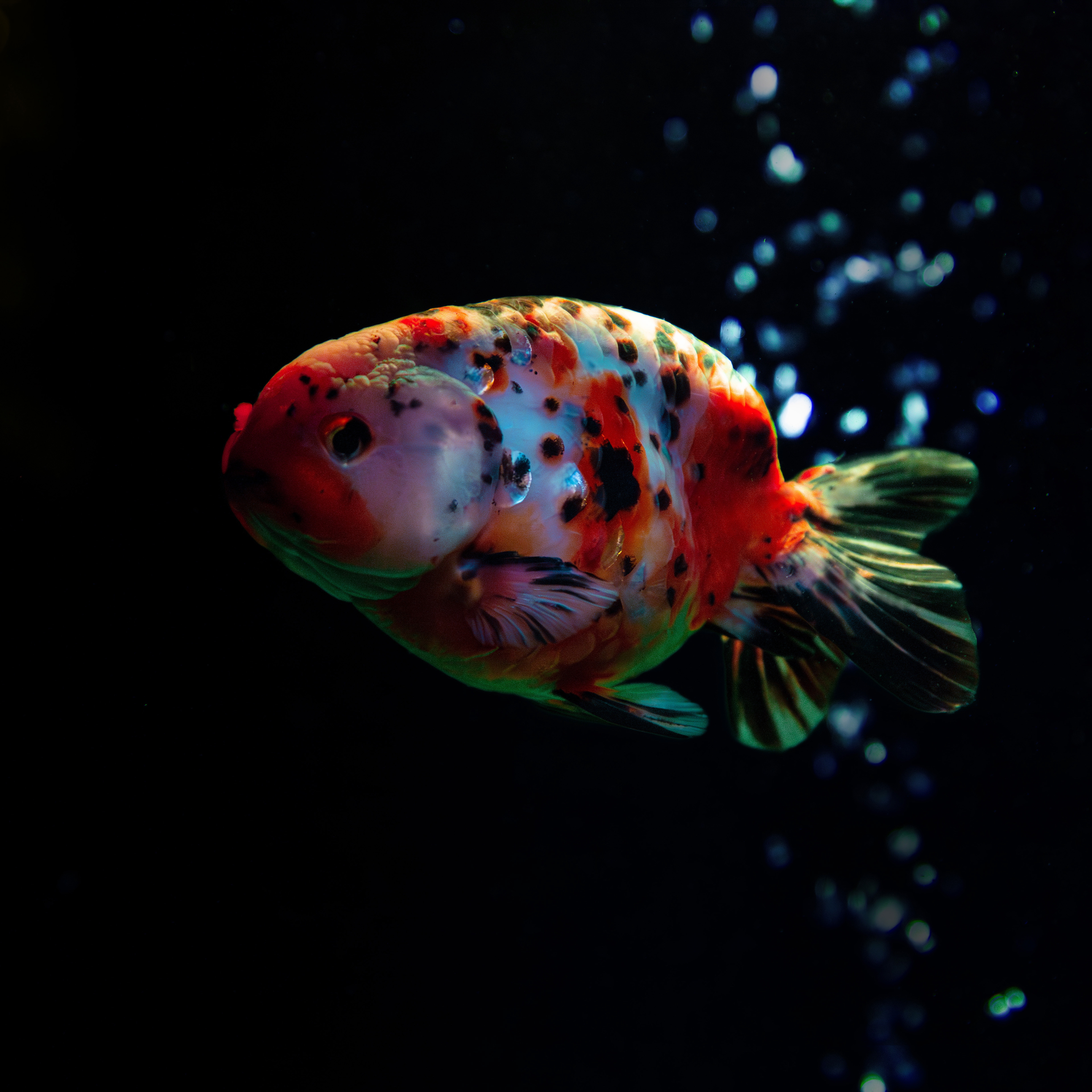
Three Colors Connecting East and West ~Exoticism in Calico~
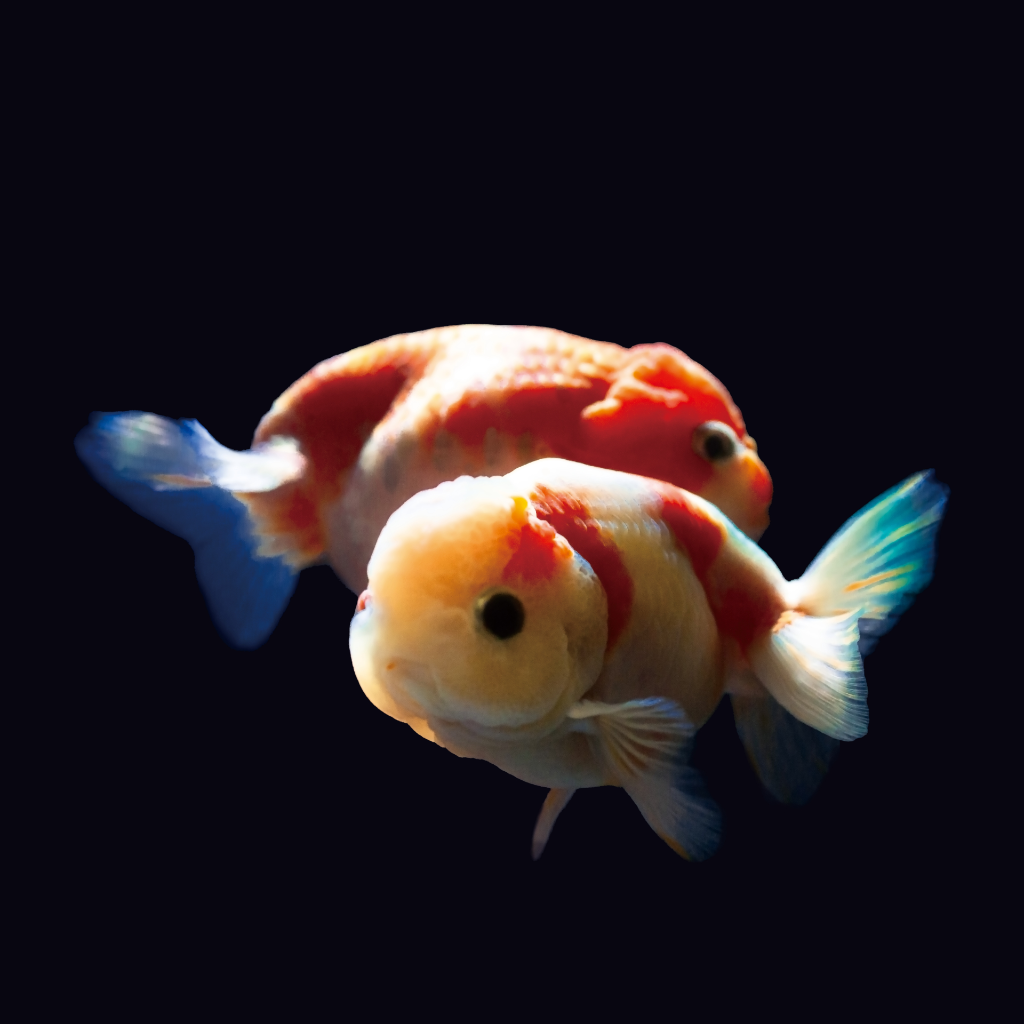
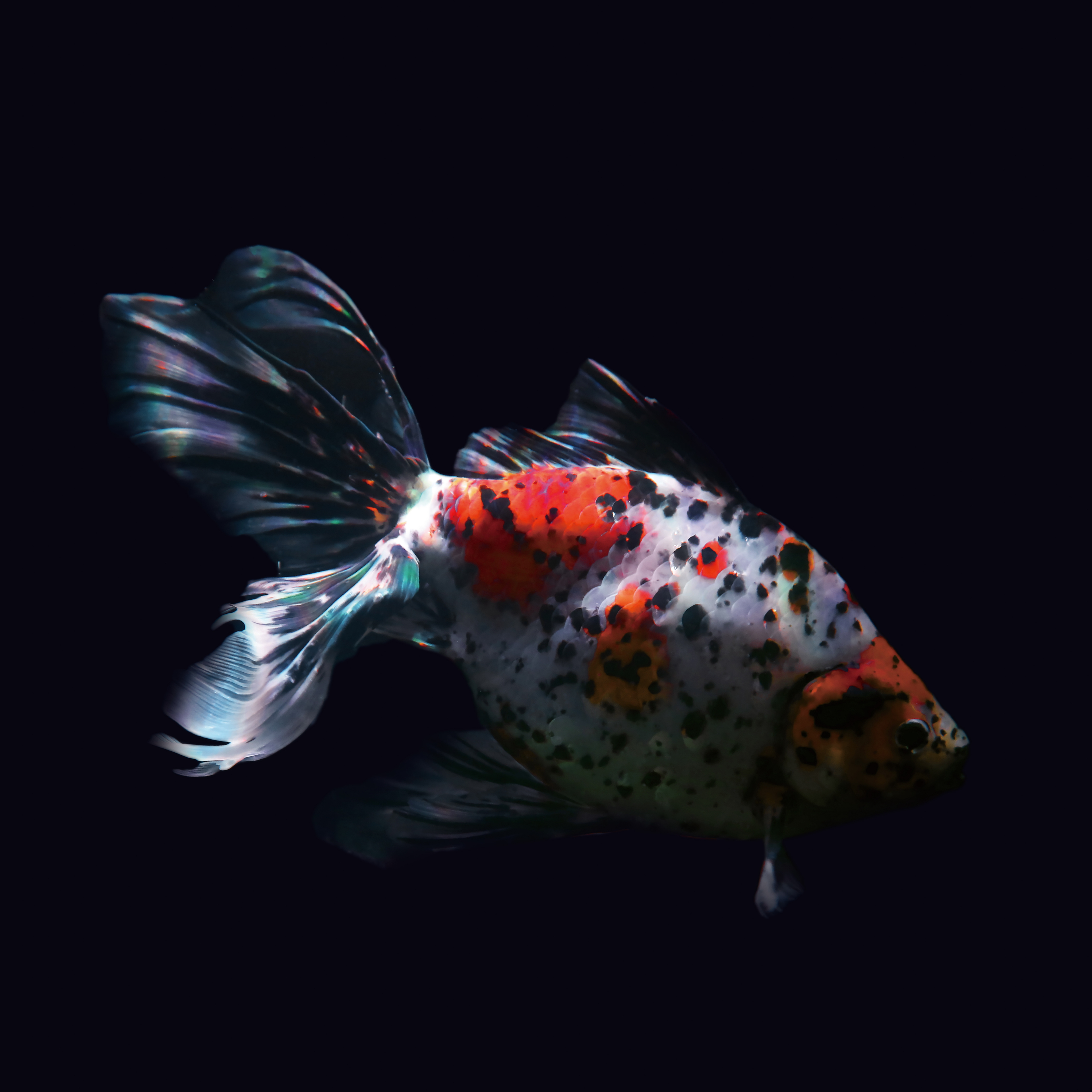
As the era shifted from Edo to Meiji, a new beauty, distinct from the harmony of 'red and white', was added to the world of goldfish.The symbol of this was the 'three colors'(sanshoku) where red, white, and black mix complexly, and the goldfish called 'Calico'.
Changes Brought by Asagi - iro(Pale Blue)
Varieties such as the "Tricolor Demekin" that appeared at the end of the Edo period were welcomed with surprise by the people of that time.In particular, a pale blue color—called "Asagi-iro" in traditional Japanese—appeared on the body of the goldfish, looking as if it were seeing through the shadows of black and red.
This complex layering of colors completely changed the image of the simple goldfish until then.Different colors dwell in each scale, changing their expression every time they swim.Its appearance gave people a fresh impression, like the exotic chintz(sarasa) that flowed in with the opening of the country, or like looking into a kaleidoscope.
Longing for the Sound of "Calico"
Entering the Meiji era, this tricolor pattern came to be called "Calico".The background to why this word, which originally referred to printed cotton cloth(Calico), became established as a word for goldfish patterns, was the people's longing for Western culture at that time.
Traditional Japanese beauty and the newly introduced Western gorgeousness.The tricolor goldfish where these two mixed was truly a symbol of the turning point of the times.People who had valued "ordered beauty" until then began to find new "iki"(chic) and "beauty" in the complex and sometimes irregular markings.
Goldfish born in the East meet Western words and are polished as new values.The curiosity of the Japanese people at that time, spreading to the other side of the sea, is still vividly engraved in the three colors.
Katsumi Suzuki, "Goldfish and Japanese"(Kodansha Academic Paperback, 2019): Description of the history of selective breeding since the Meiji era and the influence of Western culture on goldfish naming and appreciation.
Yoshihiro Omori, "Goldfish Color x Shape Mystery Solving Encyclopedia"(Kagaku - Dojin, 2022): Cultural historical record of how the tricolor(Calico) became established and established as a variety.
Nobuaki Okamoto and Yonosuke Kawada, "Goldfish (Japanology Collection)"(Kadokawa Sophia Bunko, 2015): Explanation of the diversification of appreciation styles brought about by colors, such as Tricolor Demekin and Calico Ryukin.