Mechanism of Goldfish Red Color: Science of Pigment Cells and Light
# Mechanism of Goldfish Red Color: Science of Pigment Cells and Light
Last time, we talked about red individuals being born from Funa due to mutation. A mutation occurred in the gene that makes melanin, reducing black pigment, and thus making it red.
But wait a minute.
"If black is reduced, why does it become red? Shouldn't it become transparent?"
Don't you think so? I thought so at first too.
Actually, the secret of goldfish color is deeper and more interesting. This time, let's peek into the world of pigment cells.
Fish Skin is Made of Pigment Cells
What are Pigment Cells?
Our human skin color is determined by melanin pigment. Getting a tan is because melanin increases.
Fish also have pigments. But how fish create color is much more complex and fascinating than humans.
Fish skin has special cells called Pigment Cells (Chromatophores). Inside these cells are various pigments.
5 Types of Pigment Cells in Fish
Fish have as many as 5 types of pigment cells.
1. Melanophores (Black Pigment Cells)
- Contain black melanin pigment
- Most common pigment cell
- Create brown to black colors
2. Xanthophores (Yellow Pigment Cells)
- Contain yellow carotenoid pigments
- Also pteridine pigments
- Create yellow to orange colors
3. Erythrophores (Red Pigment Cells)
- Contain red carotenoid pigments
- Create red to pink colors
- This is goldfish red!
4. Iridophores (Iridescent Pigment Cells)
- Contain guanine crystals, not pigments
- Reflect light and shine
- Create silver and rainbow colors
5. Leucophores (White Pigment Cells)
- Contain purine compounds
- Create white color
These 5 types of pigment cells combine to create the fish's body color.
Differences in Pigment Cells between Funa and Goldfish
Case of Normal Funa
Normal gray Funa have this combination of pigment cells:
Funa Pigment Composition:
- Melanophores: Abundant (Black is strong)
- Xanthophores: Some (Yellow, but hidden)
- Erythrophores: Almost none or hidden
- Iridophores: Present (Silvery shine)
Because there are plenty of melanophores, it looks dark grayish-brown overall. Even if there are yellow or red pigment cells, they are hidden by black and not noticeable.
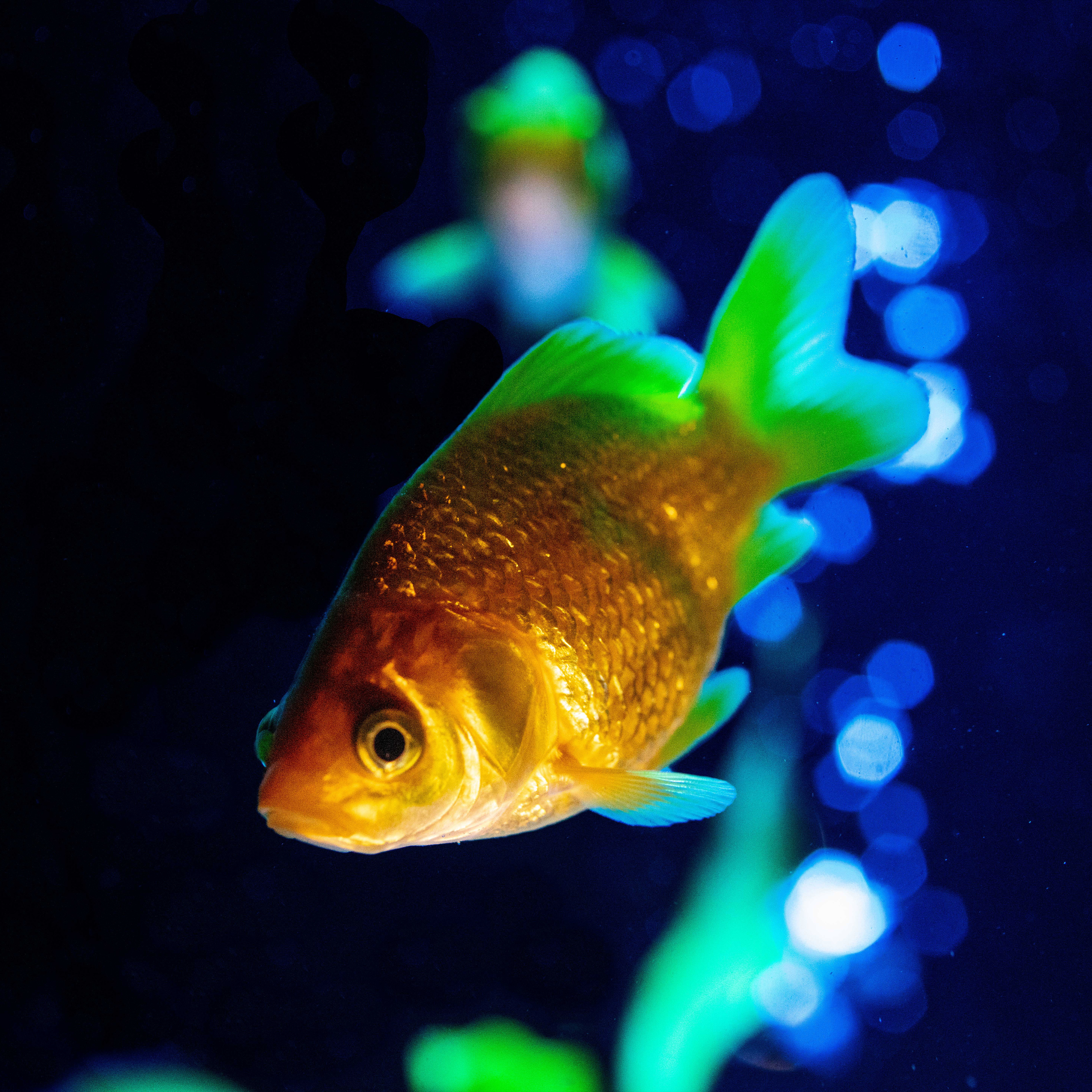
Case of Red Goldfish
So, what about red goldfish?
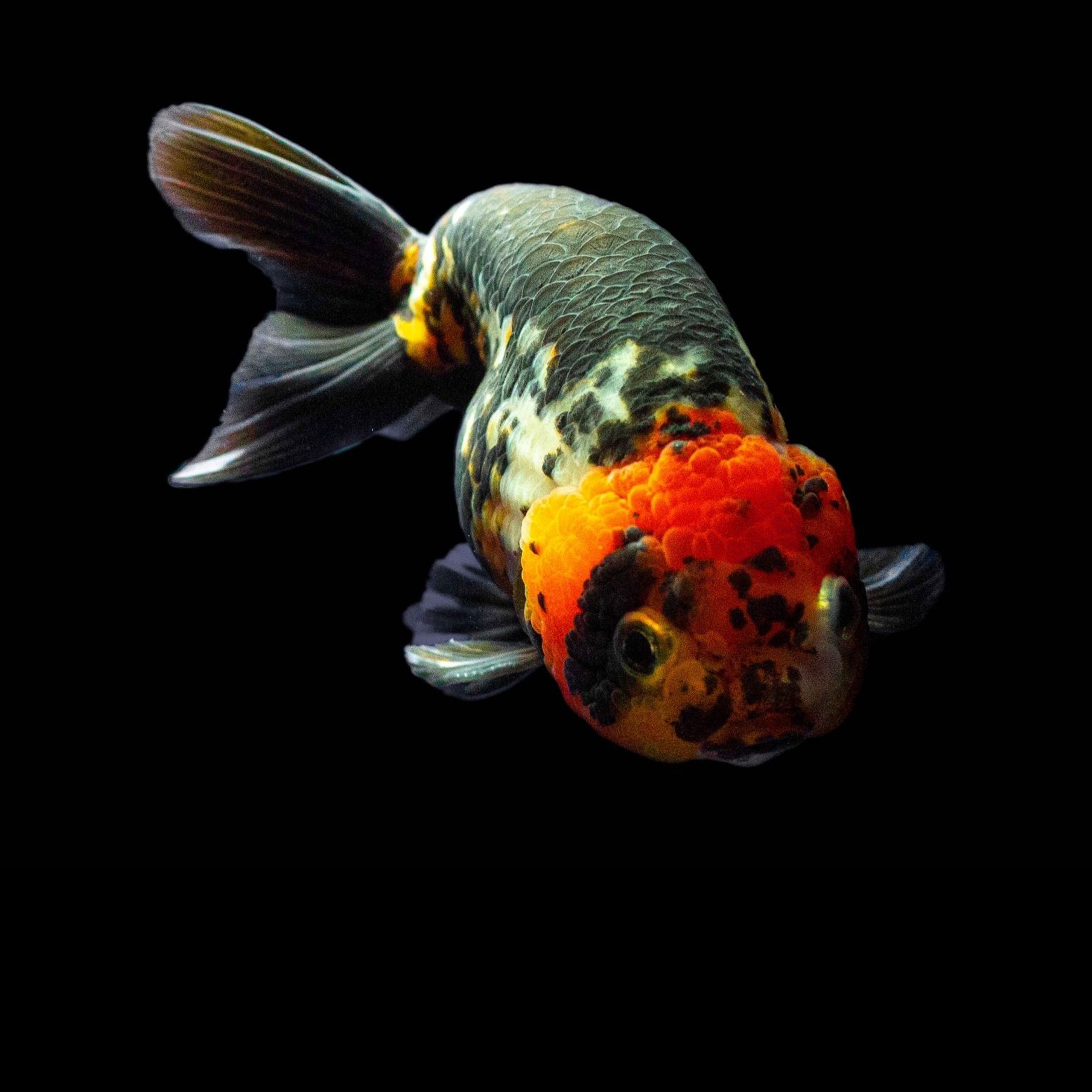
Goldfish Pigment Composition:
- Melanophores: None or extremely few ← This is the difference!
- Xanthophores: Present (Yellow)
- Erythrophores: Abundant! (Red)
- Iridophores: Present (Shine)
Melanophores are absent or extremely scarce. Therefore, the hidden red and yellow pigment cells appear on the surface, making it look red.
In other words:
Not "It became red because black disappeared," but
"Black disappeared, so the red that was originally there became visible."
This is the correct answer.
True Identity of Carotenoids
Pigments Taken from Food
Carotenoids create the red color of goldfish. Actually, fish cannot make this pigment themselves.
Characteristics of Carotenoids:
- Pigments made by plants, algae, and bacteria
- Fish take them in from food
- Accumulate in the body
- Create red, orange, and yellow colors
Familiar examples:
- Orange of carrots → Carotene (a type of carotenoid)
- Red of tomatoes → Lycopene (a type of carotenoid)
- Red flesh of salmon → Astaxanthin (a type of carotenoid)
Yes, salmon also take in red color from what they eat, just like goldfish.
Color Changes Depending on Feed
Interestingly, goldfish red color changes with feed content.
If they eat feed with plenty of carotenoids, they become a more vivid red. Conversely, with feed low in carotenoids, the color fades.
Color Enhancing Feed:
In goldfish keeping, there is "Color Enhancing Feed". This feed contains a lot of carotenoids to make the goldfish red more vivid.
Spirulina algae, paprika, shrimp shells, etc., are often included.
Ancient Chinese people probably realized empirically that "feeding this makes them red."
Mechanism of Melanin Disappearance
Enzyme Called Tyrosinase
Now, why did melanophores disappear in red goldfish?
We touched on it last time, but let's look in more detail.
Melanin Synthesis Process:
1. There is an amino acid called Tyrosine
2. An enzyme called Tyrosinase works
3. Tyrosine is oxidized
4. Via Dopa, Dopaquinone
5. Melanin pigment is made
In goldfish, there is a mutation in the gene that makes this Tyrosinase.
Types of Gene Mutations
There are several patterns of Tyrosinase gene mutations.
Complete Loss Type:
- Gene is completely broken
- Tyrosinase is not made at all
- Zero melanin → Albino (White goldfish)
Partial Loss Type:
- Gene is partially mutated
- Tyrosinase is made a little or function is weak
- Low melanin → Red goldfish
Regulatory Region Mutation:
- Gene itself is normal, but the switch is broken
- Amount of Tyrosinase decreases
- Low melanin → Various color variations
These variations in mutations create the diverse colors of goldfish.
Light Reflection and Structural Color
Role of Iridophores
Sometimes goldfish bodies shine brightly, right?
That is the work of Iridophores.
Iridophores do not contain pigment, but have layers of Guanine Crystals. These crystals reflect light and shine.
Mechanism of Structural Color:
- Light hits the layer of guanine crystals
- Light reflects and interferes between layers
- Specific wavelengths of light are emphasized
- Looks shining silver or rainbow
This is a phenomenon called "Structural Color". It is color due to microscopic structure, not pigment.
It's the same principle as the surface of a CD or DVD looking like a rainbow.
Metallic Goldfish
Some goldfish have a particularly strong metallic luster.
This is because Iridophores are particularly developed. If the guanine crystal layer is thick and arranged regularly, it shines more strongly.
The origin of the name "Goldfish" (Kingyo) probably comes from this metallic shine.
Pigment Cells Move!
Amazing Adaptive Ability
Fish pigment cells have another amazing ability.
Pigments can move!
Pigment granules inside the pigment cell gather or scatter. by this, fish can change their body color.
Mechanism of Color Change:
1. In bright places, pigments gather → Body color becomes pale
2. In dark places, pigments spread → Body color becomes dark
3. Pigments move due to stress → Color changes
Goldfish color also changes slightly depending on the environment.
Color Change as Environmental Adaptation
This was an important ability for wild Funa.
If they can adjust body color to match the environment, they can hide more effectively. Pale on bright sandy bottoms, dark on dark muddy bottoms.
But since goldfish live in an environment with no natural enemies, this ability is not used much. Rather, humans thought "it's troublesome if the color changes," so they selected and bred individuals with stable colors.
White Goldfish, Black Goldfish
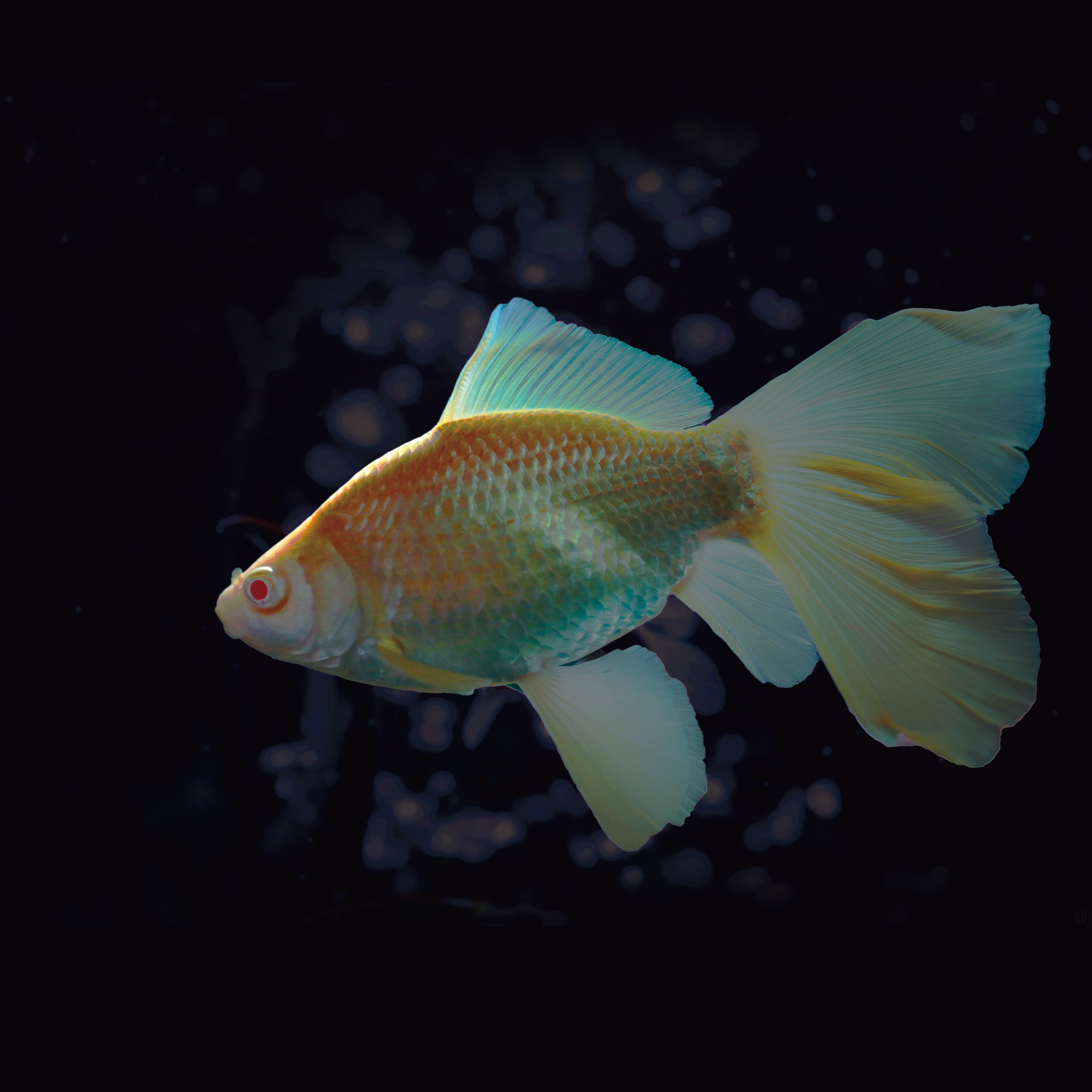
Albino Goldfish
There are also pure white goldfish.
This is a mutation called Albino.
Characteristics of Albino:
- Absolutely no melanin pigment
- Red eyes (blood vessels are visible)
- Tyrosinase gene does not function completely
In albino goldfish, carotenoids often do not deposit well, becoming pure white.
They are very beautiful, but actually have weak eyesight and are sensitive to ultraviolet light, so they are a bit delicate.
Black Goldfish (Demekin, etc.)
Conversely, there are pitch black goldfish. Like Demekin.
These are individuals where melanophores are functioning normally or working excessively.
If you breed red goldfish for several generations, black individuals are sometimes born. This is the result of the melanin synthesis gene returning to normal (back mutation) or a different combination of genes.
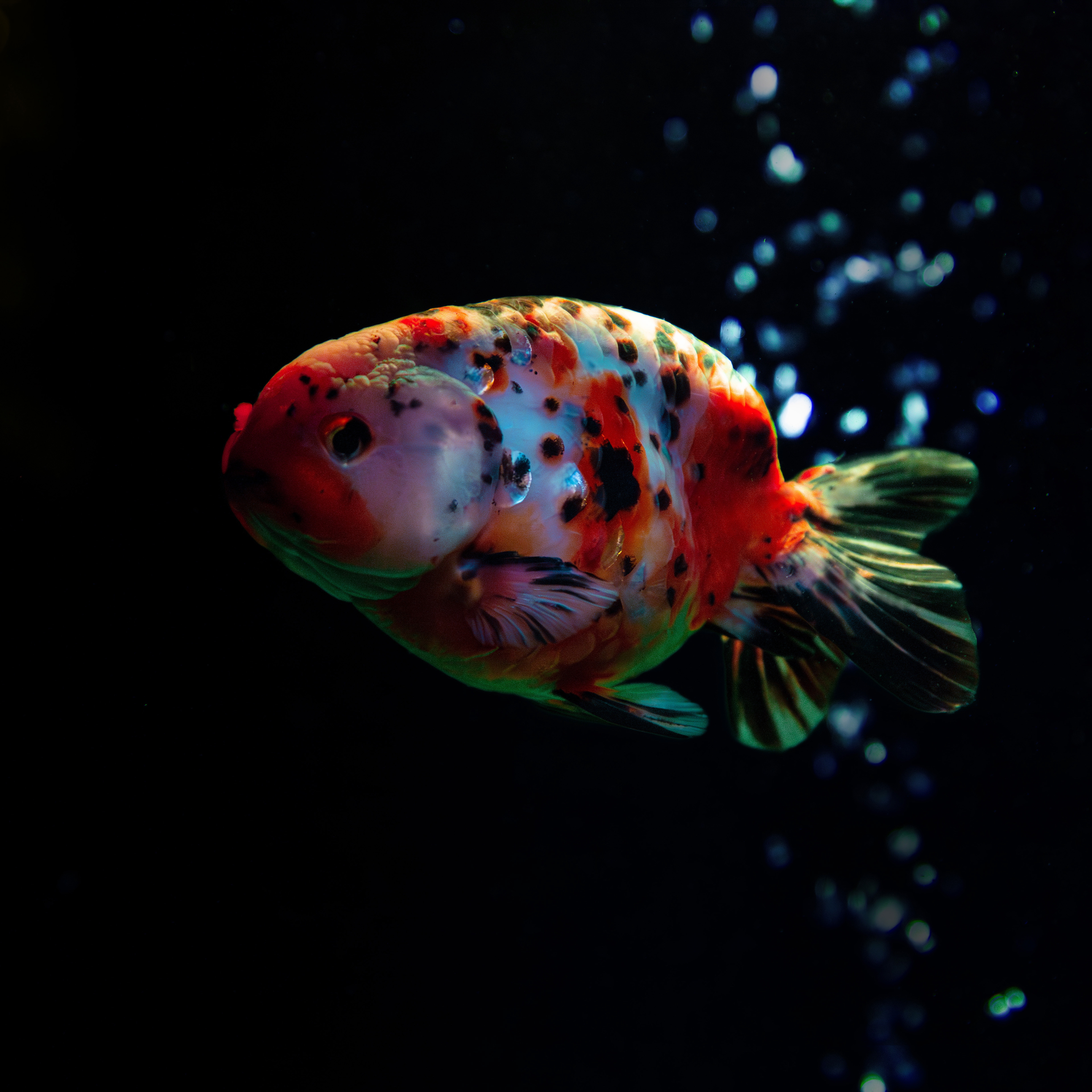
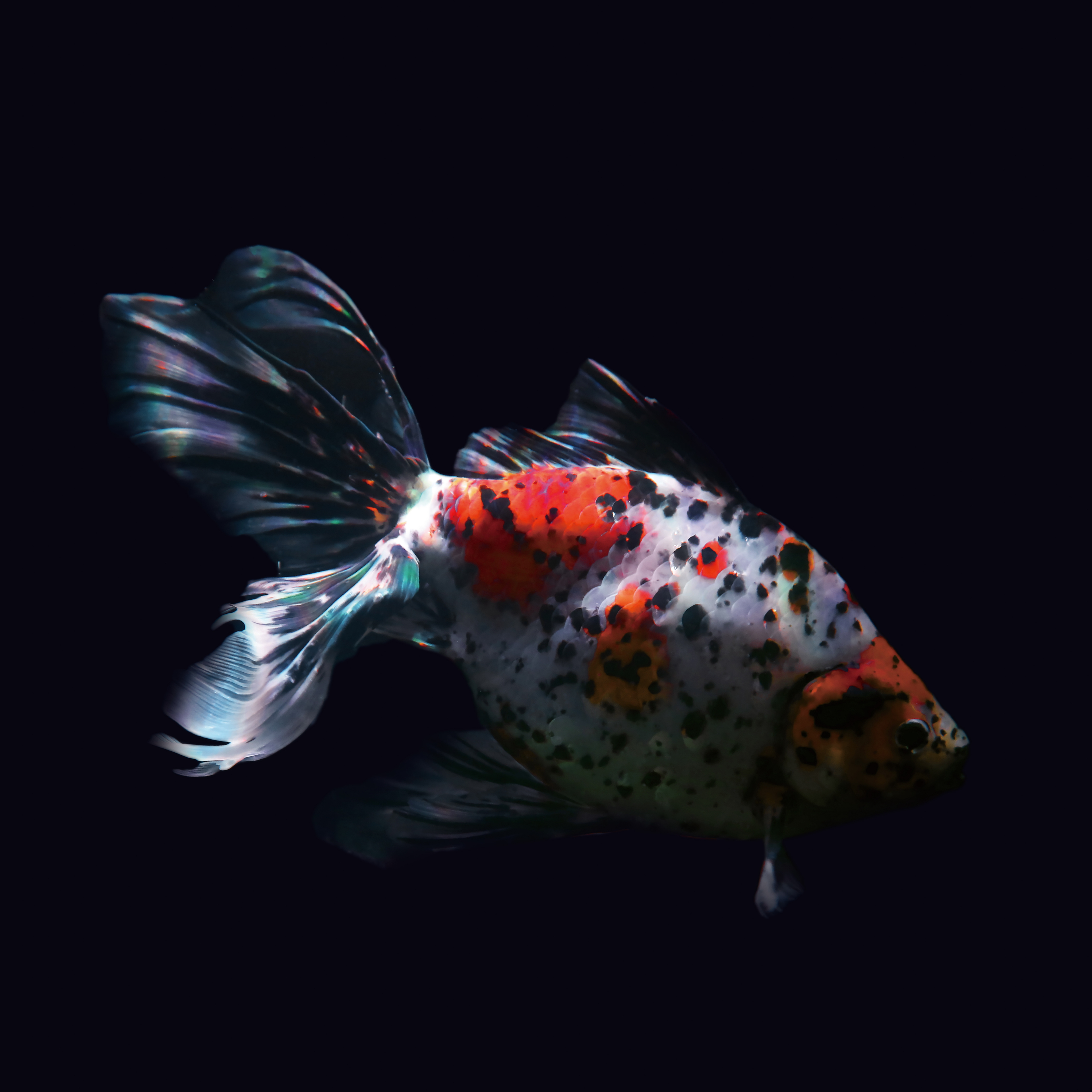
Mottled Goldfish
There are also goldfish with mottled patterns of red and white, or red and black.
This is because the type and amount of pigment cells differ depending on the body part.
Reason for Mottled Patterns:
- Pigment cells are distributed unevenly during development
- Gene function differs depending on body location
- Balance of multiple pigment cells differs for each part
This unevenness is also the result of humans selecting "interesting" or "beautiful".
Summary: Goldfish Color is Cellular Art
We've come to understand the secret of the goldfish's beautiful red color.
Summarizing the points:
1. Fish body color is made of 5 types of pigment cells
2. Funa is gray because melanophores are abundant
3. Goldfish is red because melanophores are few
4. Red color is made of carotenoids (from food)
5. Melanin decreased due to Tyrosinase gene mutation
6. Iridophores create metallic shine
7. Diverse colors are born from combinations of pigment cells
Gene mutation, types of pigment cells, pigment from food, light reflection... all these combined to create the beautiful appearance of the goldfish.
It truly is a work of art at the cellular level.
Next time, we will enter the story of ancient China, the people who first discovered this red Funa.
References
(References omitted for brevity, please refer to the Japanese text or original sources)
Note: This article is an essay for general readers and not a specialized academic paper. The content is based on the above references but expressions are simplified for clarity.
Related Articles
- Goldfish's Ancestor is the Chinese Crucian Carp! (Part 2)
- What is Mutation? A Biological Explanation (Part 3)
- Goldfish Boom in Song Dynasty China: Court Culture and Birth of Ornamental Fish (Scheduled for next release)