What is Mutation? A Biological Explanation of the Mechanism Turning Crucian Carp Red
# What is Mutation? A Biological Explanation of the Mechanism Turning Crucian Carp Red
Last time, we learned that the ancestor of the goldfish is the crucian carp (Funa), and that the Chinese Ginbuna lineage is the root of goldfish.
But a big question remains here.
Why is a red fish born from a gray Funa?
The answer lies in "mutation". But what exactly is a mutation? Is it something scary? Or something that happens normally?
This time, let's step into the world of biology a little and look at the mechanism of mutation. There are some difficult topics, but I will explain them as simply as possible.
Basic Knowledge of Genetics and DNA
The Blueprint of Life: DNA
To understand mutation, first you need to know about "DNA".
You learned it in school science class, right? DNA is the "blueprint of life".
All living things have this substance called DNA. Humans, Funa, plants, bacteria. Bodies are made according to the information written in this DNA.
Structure of DNA:
- Double helix structure (shaped like a twisted ladder)
- Four types of "letters": A (Adenine), T (Thymine), G (Guanine), C (Cytosine) are lined up
- The arrangement of these letters is "genetic information"
To use an analogy, DNA is a "recipe book of life". It's a very long recipe written with the four letters A, T, G, and C.
What is a Gene?
In DNA, parts with specific functions are called "genes".
Each gene is a blueprint for making one protein.
From Gene to Protein:
1. The gene part of the DNA is read
2. A protein is made based on that information
3. The protein does various jobs in the body
Funa's body color is also determined by genes.
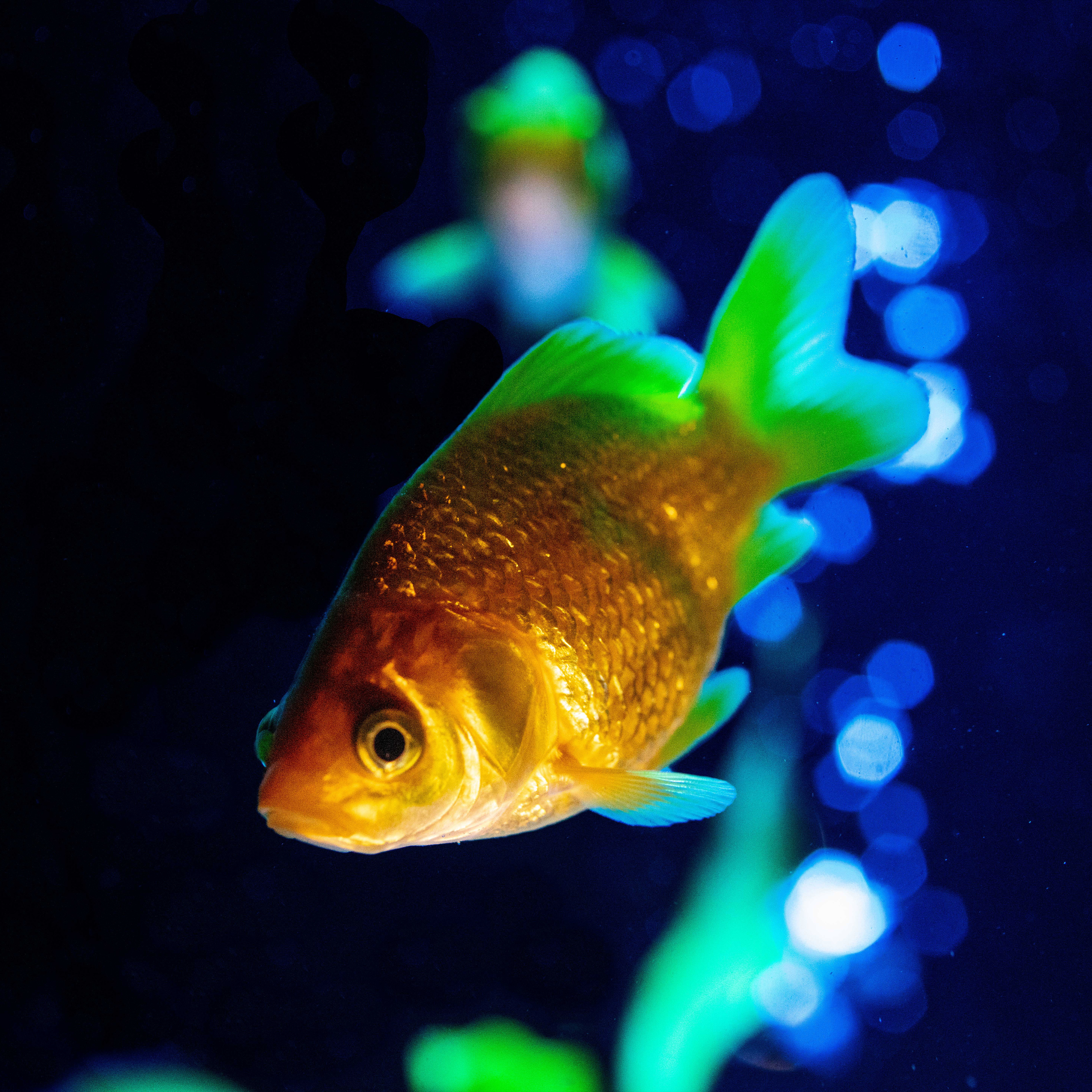
There is a "gene that makes black pigment", and under the instruction of that gene, a black pigment called melanin is made. That's why Funa has a gray color.
Inherited from Parent to Child
DNA is inherited from parent to child.
So if the Funa parent is gray, the child is usually gray too. Because they receive the same genetic information as the parent.
Then, why are children of different colors sometimes born?
What is Mutation?
"Typos" in DNA
Mutation is when the letters of DNA change.
Think of it like a "typo" getting into a recipe book.
For example:
- Original recipe: "Add sugar (satou)"
- Typo recipe: "Add sand (suna)"
Just one letter difference makes something completely different, right? DNA is the same.
Definition of Mutation:
A change in the DNA base sequence (arrangement of A, T, G, C). This changes genetic information, and characteristics different from parents may appear.
Mutation is Not Rare
When you hear "mutation", you might think it's something scary or abnormal.
But actually, mutations are constantly happening in nature.
When living things leave offspring, they copy their DNA, but this copying work is not perfect. Since billions of characters are copied, mistakes sometimes happen.
Frequency of Mutation:
- Mutation occurs at a rate of about 1 in 1 billion bases per DNA replication
- In humans, about 100 new mutations occur in one generation
- Funa also accumulate mutations every generation in the same way
In other words, we all have DNA slightly different from our parents.
Various Patterns of Mutation
There are several types of mutations.
1. Point Mutation (One letter swap)
- Most common
- One letter of DNA changes to another
- Example: ATG → ACG
Many mutations related to goldfish color are of this type.
2. Insertion Mutation (Letters added)
- New letters interrupt DNA
- Example: ATG → ATCG
3. Deletion Mutation (Letters disappear)
- Letters are lost from DNA
- Example: ATCG → A~~TC~~G
When insertion or deletion occurs, the reading of subsequent letters may shift completely. This is called a "frameshift" and has a large impact.
4. Chromosomal Level Mutation
- Larger scale changes
- Large chunks of DNA are swapped, added, or removed
- Large impact
Why are Red Individuals Born in Funa?
Now, here is the main topic.
Mechanism Determining Funa's Body Color
Funa's grayish body color is made of several pigments.
Funa Pigments:
1. Melanin Pigment (Black) ← Most abundant
2. Guanine Crystals (Silvery shine)
3. Carotenoids (Yellow-Red) ← Small amount
Normal Funa have plenty of melanin, so they look dark overall. They also have carotenoids, but they are hidden by melanin and not noticeable.
When Mutation Occurs in Pigment Genes
However, what happens if a mutation occurs in the gene that makes melanin?
Melanin is no longer made, or is reduced.
Then...
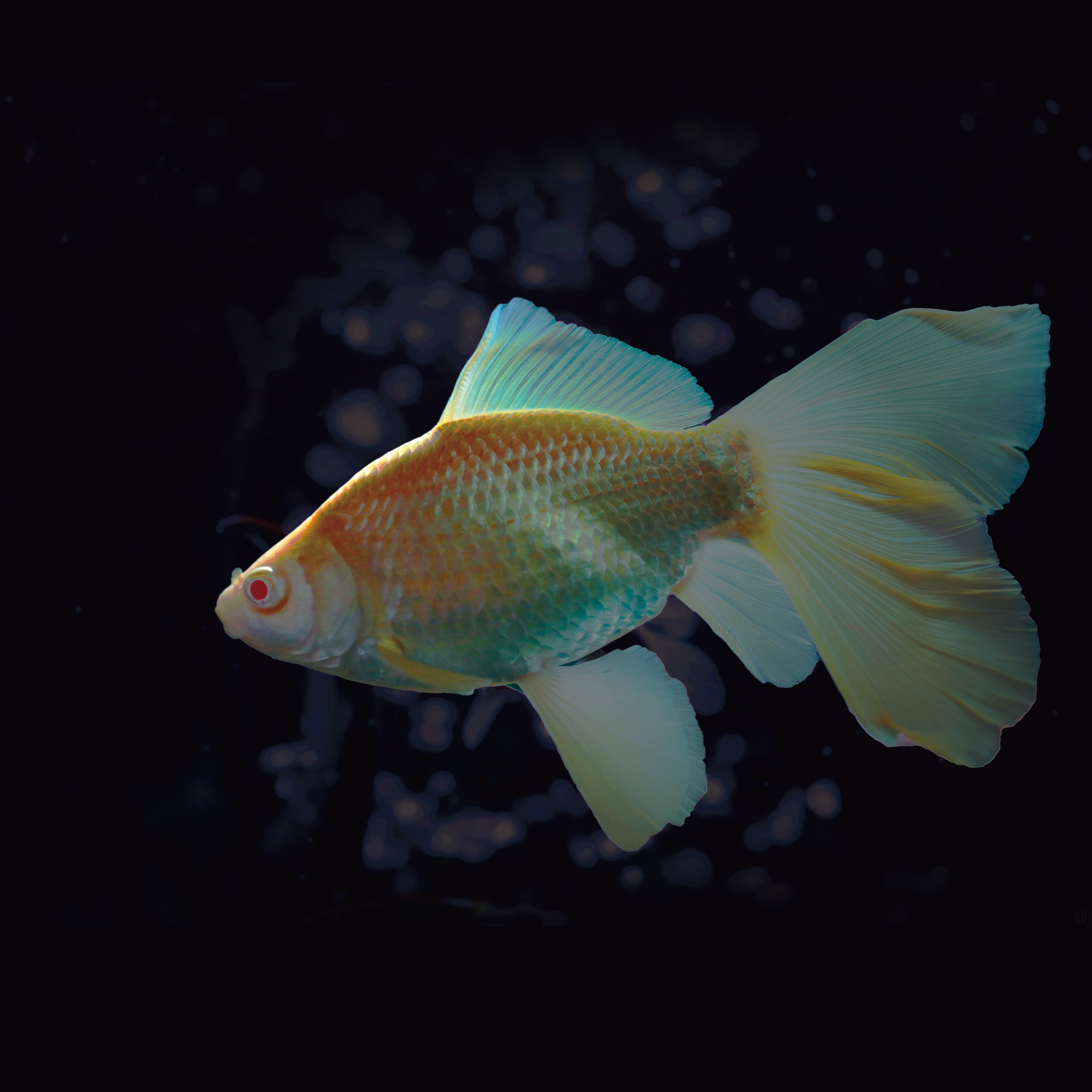
The black color disappears, and the hidden yellow-red carotenoids become noticeable!
This is the true identity of the red Funa.
Due to gene mutation, melanin synthesis is blocked, and as a result, it looks red or gold.
The Troublesome Property of Recessive Inheritance
This "red" gene has another important feature.
It is recessive inheritance.
Genetics has "dominant" and "recessive".
- Dominant Gene: Characteristics appear even if inherited from only one parent
- Recessive Gene: Characteristics do not appear unless inherited from both parents
The red gene is recessive. In other words, unless you inherit the red gene from both parents, you won't become red.
So, it doesn't spread easily in the wild.
Red Funa in the Wild:
1. An individual with a red gene is born by mutation
2. But usually looks gray (because it's recessive)
3. When individuals with the red gene happen to mate
4. Some of the children become red
Probabilistically, it is very rare.
Red Funa Cannot Survive in Nature
Being Conspicuous is Dangerous
Even if a red Funa is born, it is difficult to survive in nature.
The reason is simple. It stands out too much.
As explained before, Funa's gray is protective coloration. It blends into the bottom of the water or water plants to protect itself from natural enemies.
But with a red body:
- Visible from birds in the sky
- Easily found by carnivorous fish in the water
- Eaten immediately
So, even if red Funa are born, they are eliminated immediately.
Survived Because Humans Protected Them
But if humans keep them in a pond, it's a different story.
Safe environment with no natural enemies. Feed is given regularly. Even if red, they can live without problems.
Ancient Chinese people found this rare red Funa and thought "Beautiful!". And they protected it carefully.
Human selection saved the red Funa.
Accumulation of Mutations Creates Diversity
Typically Doesn't End with One
The appearance of red color was the result of one mutation.
But the diversity of goldfish cannot be explained by that alone.
Goldfish have:
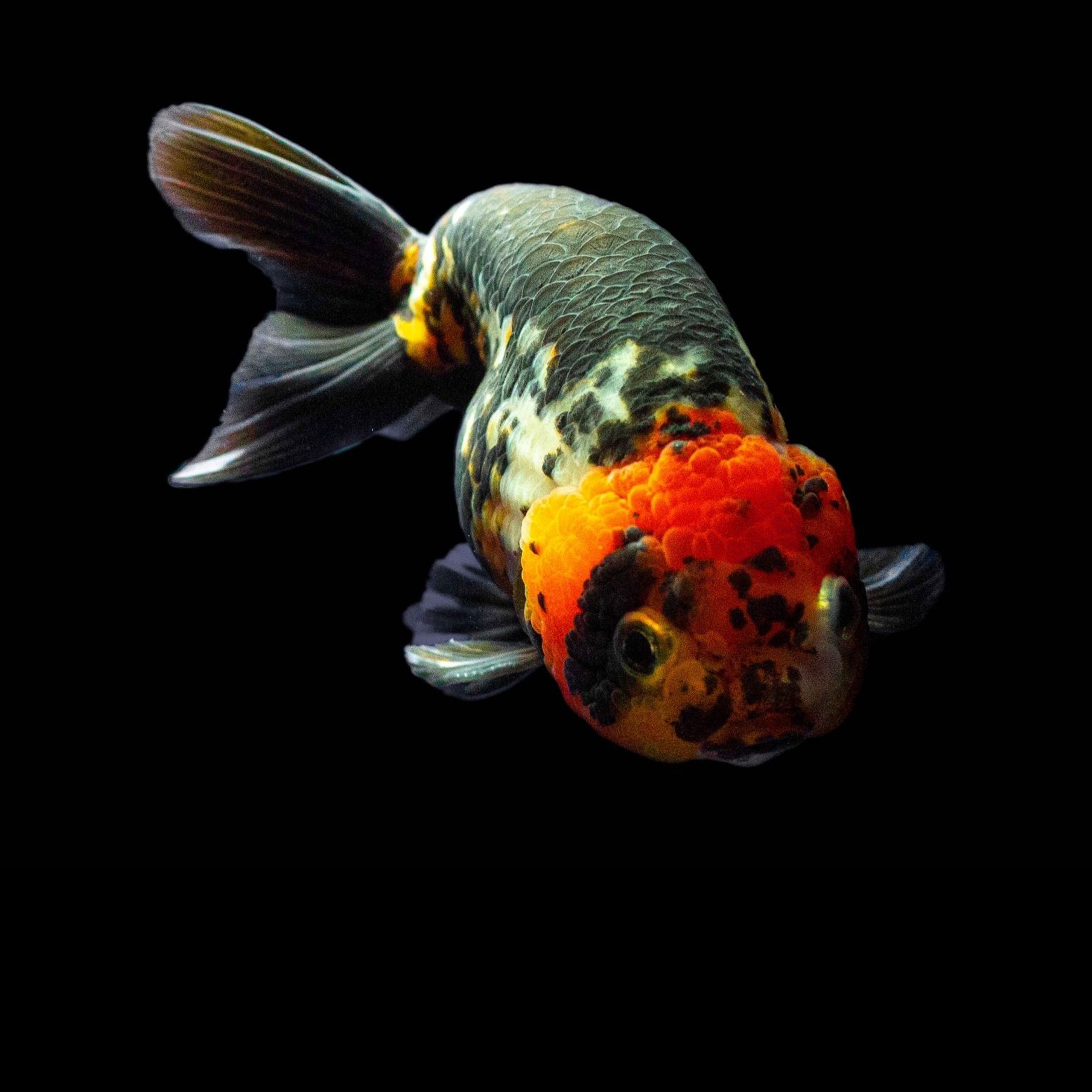
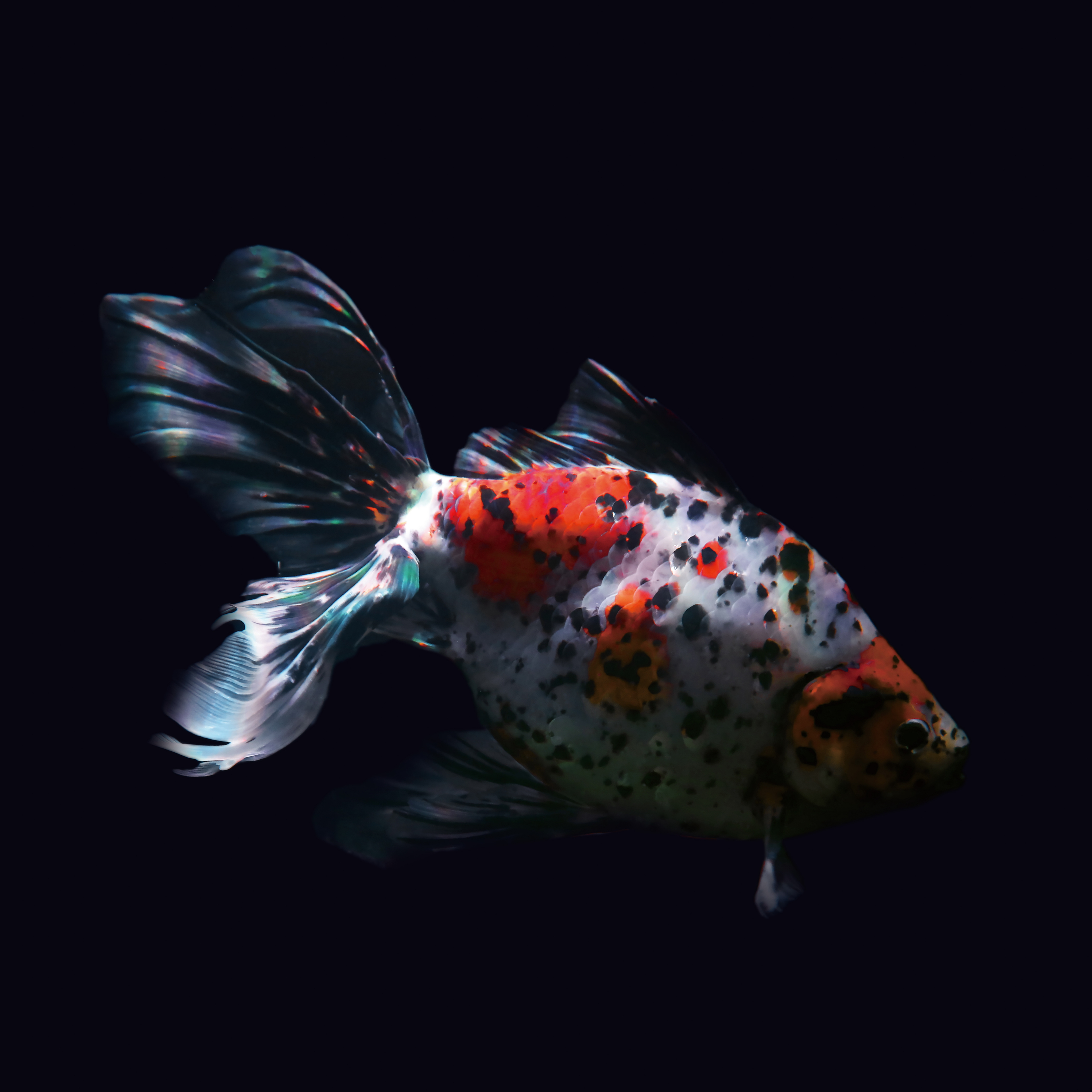
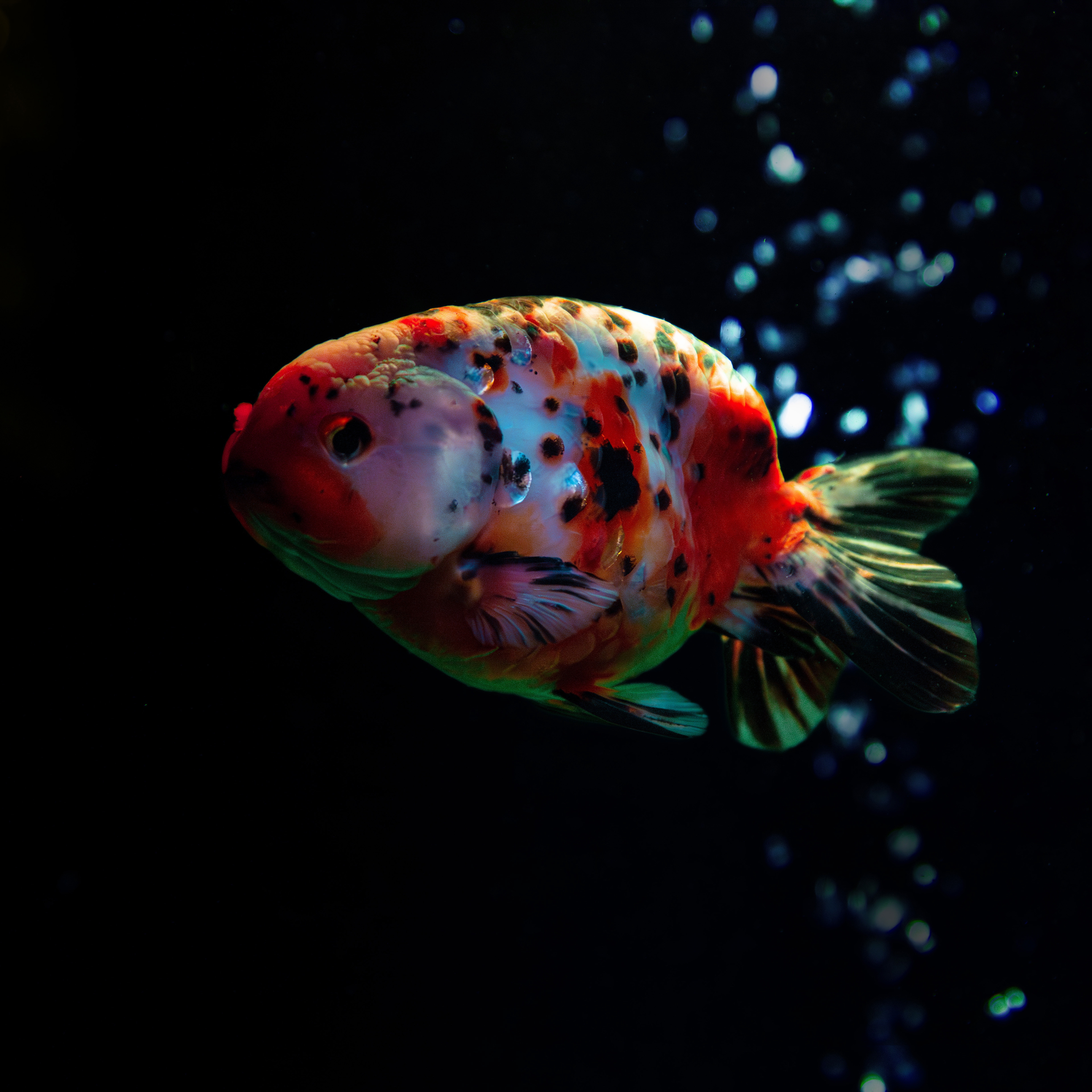
- Red, white, black, mottled, calico... various colors
- Eyes popping out like Demekin
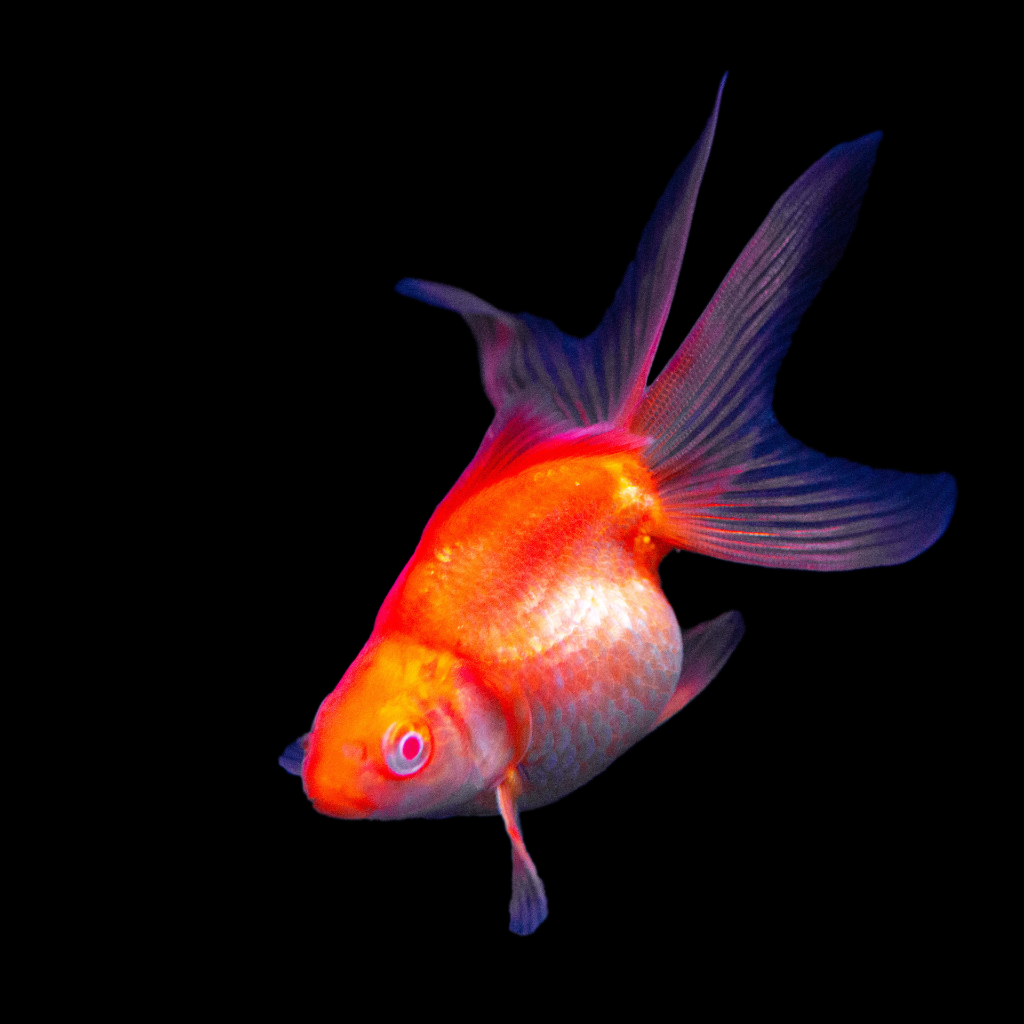
- No dorsal fin like Ranchu
- Long tail fins, split tail fins
These are all the result of accumulation of mutations over many generations.
Humans Select and Breed
Mutations that are eliminated in nature can be protected and bred if humans think they are "interesting" or "beautiful".
Breeding Process:
1. Individuals with rare characteristics are born by mutation
2. Humans select them
3. Breed individuals with the same characteristics
4. Select offspring with stronger characteristics
5. Repeat this for many generations
Thus, unique goldfish different from parents were born one after another.
Mutation is "Accidental" but also "Inevitable"
Reading this far, you might have noticed something.
The birth of goldfish is "accidental". No one can control when and where mutations occur.
But at the same time, it is "inevitable".
Reasons for Inevitability:
1. High reproductive power of Funa → Many children born → Probability of mutation increases
2. Humans keep them in large numbers → More mutant individuals likely to appear
3. Environment without natural enemies → Mutant individuals survive
4. Humans select → Interesting mutations are preserved
In other words, the characteristics of the creature called Funa and human culture combined to create the miracle of goldfish.
What Modern Genetics Revealed
True Identity of Goldfish Red Gene
Modern genetic research has clarified how goldfish red color is produced at the molecular level.
Melanin Synthesis Pathway:
1. There is a substance called Tyrosine
2. An enzyme called Tyrosinase works
3. Melanin pigment is made
In goldfish, mutation has occurred in the gene that makes this tyrosinase. The enzyme doesn't work well, so melanin is not made.
That's why it looks red.
Other Features Can Also Be Explained by Genes
Not just color.
- Demekin Eyes: Mutation in genes involved in eyeball formation
- Goldfish without Dorsal Fin: Mutation in genes involved in fin development
- Long Tail Fin: Mutation in genes controlling fin growth
Everything can be explained by mutation.
Amazing, isn't it? People hundreds of years ago didn't know about genes or DNA. But through trial and error, they created beautiful goldfish.
Summary: Mutation Created Goldfish
I hope you understand why red goldfish were born from gray Funa.
Summarizing the points:
1. Mutation is a change in DNA and is a naturally occurring phenomenon
2. Mutation occurred in the gene for melanin pigment, and red individuals were born
3. Red color is recessive inheritance, so it is difficult to spread in the wild
4. Eliminated in nature, but survived under human protection
5. Accumulation of mutations over many generations created the diversity of goldfish
The accident of mutation and the inevitability of human aesthetics. The combination of these two gave birth to the goldfish culture that has lasted for over a thousand years.
Next time, we will look at how this red Funa was specifically protected and bred. We will look at the goldfish boom in the Song Dynasty of China.
References
1. Abe, S., et al. (2005). "Molecular cloning and expression of tyrosinase gene in goldfish." *Pigment Cell Research*, 18(2), 94-100.
2. Braasch, I., et al. (2007). "A new model army: Emerging fish models to study the genomics of vertebrate Evo-Devo." *Journal of Experimental Zoology Part B: Molecular and Developmental Evolution*, 308(3), 349-362.
3. Protas, M.E., et al. (2006). "Genetic analysis of cavefish reveals molecular convergence in the evolution of albinism." *Nature Genetics*, 38(1), 107-111.
4. Kelsh, R.N. (2004). "Genetics and evolution of pigment patterns in fish." *Pigment Cell Research*, 17(4), 326-336.
5. Alberts, B., et al. (2014). "Molecular Biology of the Cell (6th edition)." *Garland Science*.
6. Griffiths, A.J.F., et al. (2015). "Introduction to Genetic Analysis (11th edition)." *W.H. Freeman*.
7. Strachan, T., & Read, A.P. (2010). "Human Molecular Genetics (4th edition)." *Garland Science*.
8. Smartt, J. (2001). "Goldfish Varieties and Genetics: A Handbook for Breeders." *Blackwell Science*.
9. Chen, W.J., & Mayden, R.L. (2012). "Phylogeny of suckers (Teleostei: Cypriniformes: Catostomidae): Further evidence of relationships provided by the single-copy nuclear gene IRBP2." *Zootaxa*, 3586, 195-210.
10. Matsui, Y. (1992). 『金魚の科学』恒星社厚生閣
11. Mukherjee, S. (2016). "The Gene: An Intimate History." *Scribner*.
12. Yoshida, N. (2015). 『金魚の教科書』Seibundo Shinkosha
Note: This article is an essay for general readers and not a specialized academic paper. Some parts are simplified to explain complex topics in genetics plainly.
Related Articles
- Goldfish's Ancestor is the Crucian Carp! (Part 1)
- Goldfish's Ancestor is the Chinese Crucian Carp! (Part 2)
- Mechanism of Goldfish Red Color: Science of Pigment Cells and Light (Part 4)
- What is the Song Dynasty of China? Explaining the Historical Background (Part 5)